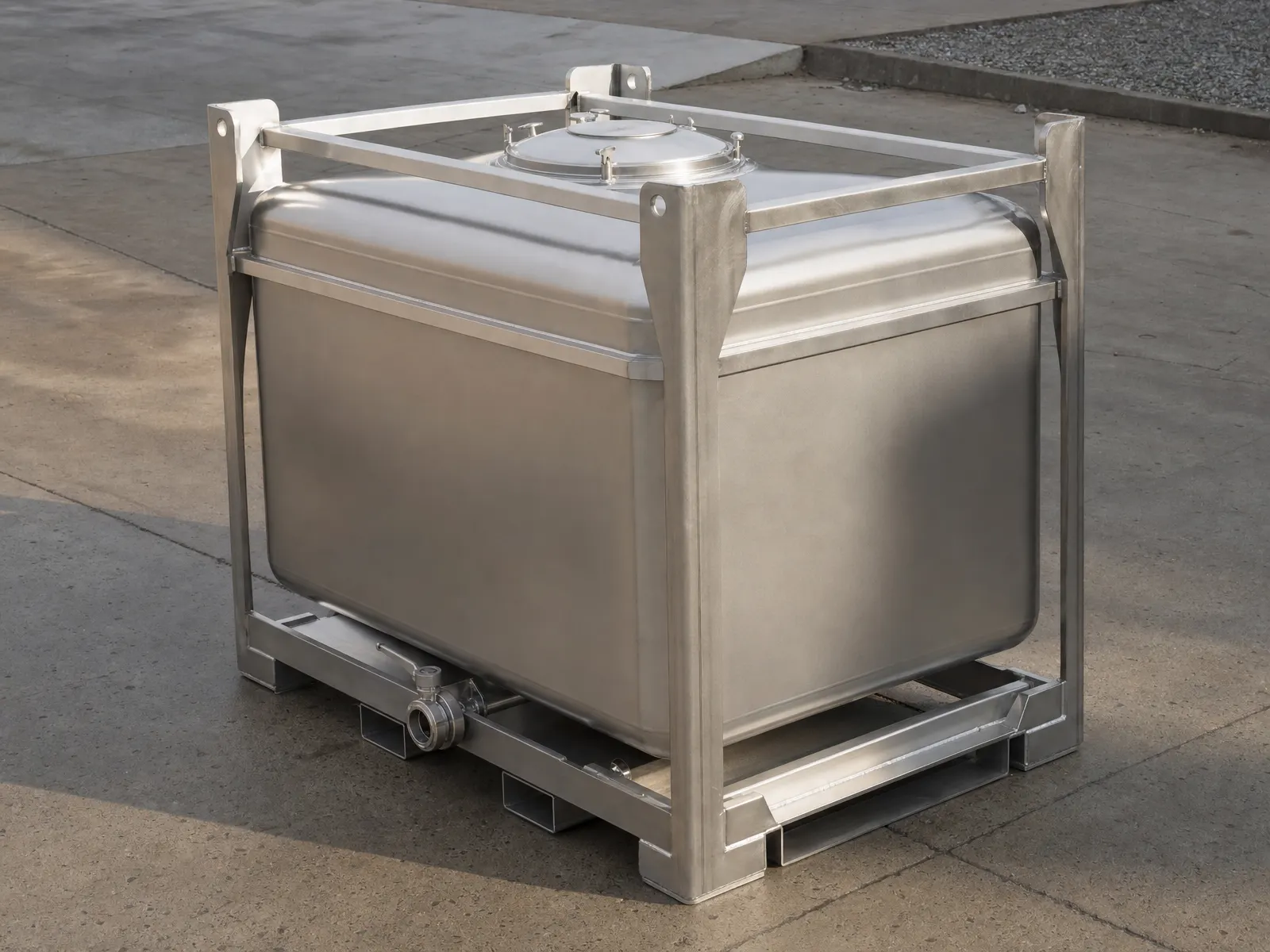
Stainless steel IBC totes
For flammable liquids a plastic tote must not hold, sanitary products that need a cleanable shell, and anything worth a container that lasts.
| Steel | 304 stainless, 10 gauge (0.135 in) |
|---|---|
| Finish | 2B (smooth mill finish) |
| UN code | 31A, qualified from 120 to 793 gal on one maker’s line |
| Sizes on that line | 350, 550 and 793 gal |
| 350 gal, tare | About 475 lb |
| 350 gal, max gross | 6,030 lb |
| Top | Manway with gasketed lid |
| Discharge and fittings | Bottom valve; size, type and gasket set on the quote |
| Fire | Metal IBCs can withstand fire for at least 30 minutes when fitted with a pressure-relief vent |
Sources: Snyder Industries, LiquiTote stainless IBC; Wikipedia, Intermediate bulk container. Last reviewed 2026-11-13.
What to check on delivery
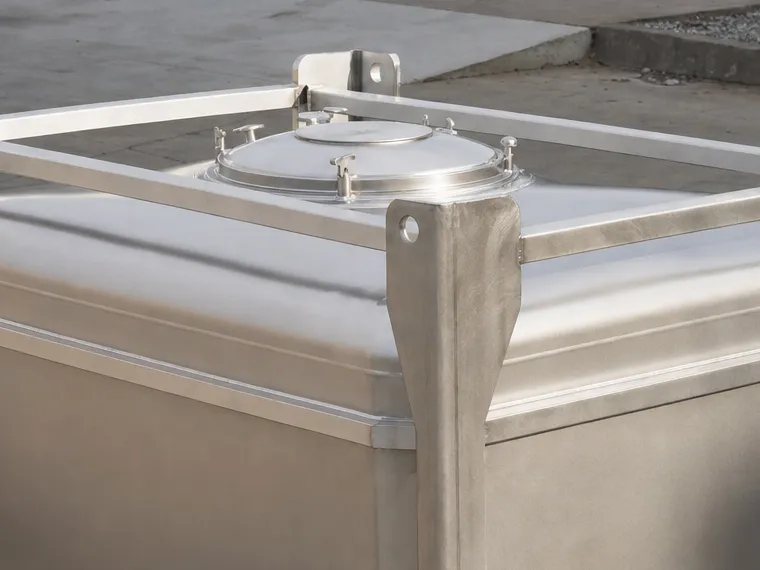
Check the UN31A plate for the month and year of manufacture, the maximum gross mass and the stacking load. Open the manway and look inside for a clean, dry shell; check the lid gasket and the valve seat; and confirm the valve, outlet and gasket material match the order before the first product goes in.
When stainless is the answer
Three kinds of buyer end up here. The first stores or ships a Class I flammable liquid: plastic and composite IBCs should never hold one, and metal IBCs are the option for those (IBCTanks.com on NFPA guidance). The second runs a sanitary process, such as a food, flavour or pharmaceutical step, and wants a shell that can be cleaned, inspected inside and sterilized for years. The third simply refills the same container hundreds of times and wants one that outlasts many plastic bottles.
A stainless IBC is not a plastic tote in metal. It stands on four legs, opens through a manway on top that you can see into and clean through, and drains from a valve tucked under the shell. It weighs several times what a caged tote does, so it costs more to ship empty, and it is usually bought to come back to you, not to go out one-way.
Reading a stainless spec
Gauge is wall thickness: 10 gauge is 0.135 in, a heavy wall for an IBC. 304 is the common austenitic stainless; it resists most foods, water-based products and many chemicals, but check chlorides and strong acids with us. The 2B finish is the smooth, slightly reflective mill finish most sanitary equipment starts from. UN31A is the code for a metal IBC for liquids, the steel counterpart of the 31HA1 caged tote.
The figures above are from one maker's published line, Snyder's LiquiTote, as an example of a current stainless design (Snyder). We quote the tote you need; its own data sheet, with its measured size and weights, comes with the quote.
Questions about this tote
- How much does a 350 gallon stainless IBC weigh?
- About 475 lb empty on one current design, with a maximum gross weight of 6,030 lb.
- Can I store a flammable liquid in a stainless IBC?
- Metal IBCs are the IBC option for Class I flammable liquids, which plastic and composite totes must not hold. Your local fire code decides how much you can store and where.
- How is a stainless IBC cleaned between fills?
- Through the top manway: most plants use a spray ball or a wash wand, drain through the bottom valve and dry it open. The smooth 2B shell has no seams in a bottle to trap residue, which is why sanitary users choose it.
- Do stainless IBCs need retesting like plastic totes?
- For hazmat service, yes: metal IBCs also need a leakproofness test and an external inspection every 2.5 years and an internal inspection at least every five years under 49 CFR 180.352. A new one starts with the whole window.
Guides for this tote
Quote stainless steel IBCs
Say how many, how often and the delivery ZIP. We quote this tote, or tell you if another suits your product better.