New totes for farms and ranches
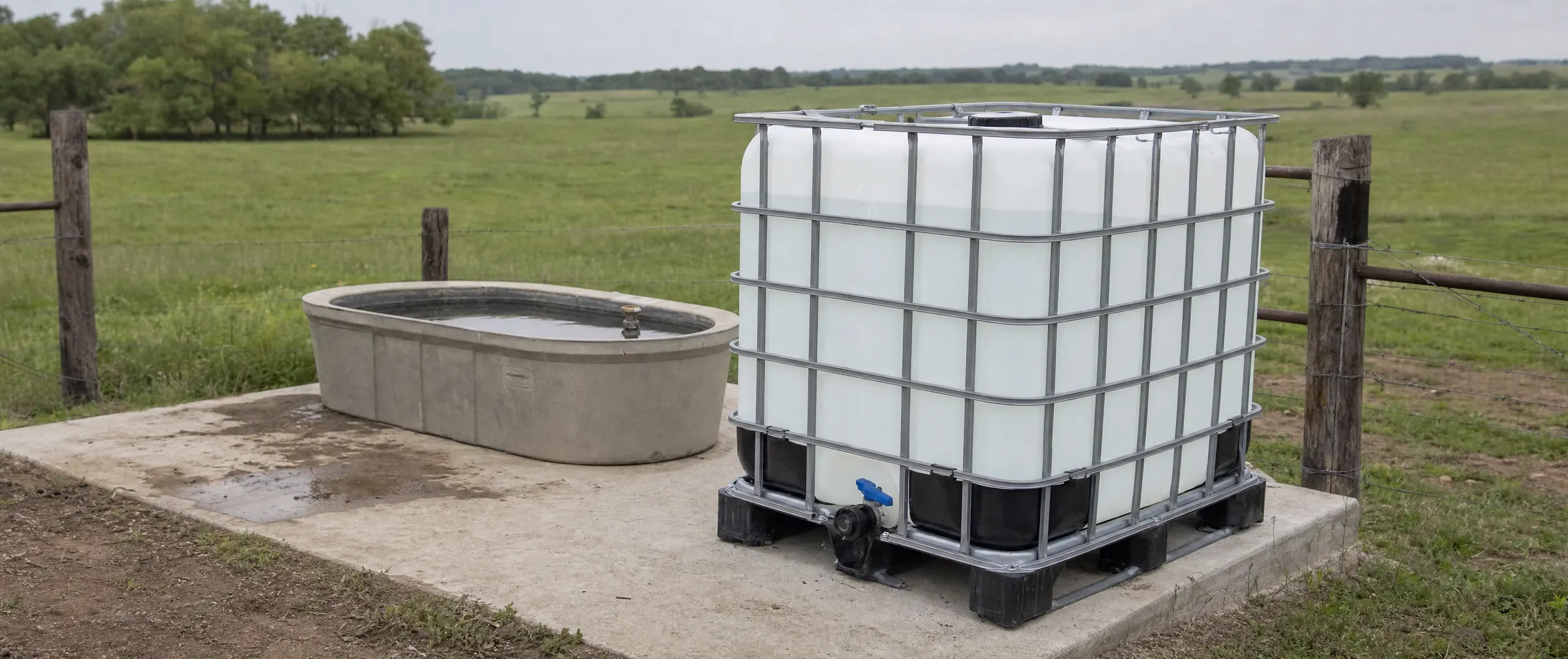
Farms and ranches use totes for water above all, and water for animals or people should go in a tote with nothing in its past. A new tote with a food-contact bottle is that container; for liquid crop inputs, a rated tote does the job.
What goes in the totes
Livestock water hauled to pastures, drinking water stored for the house or for emergencies, rainwater from barn roofs, and liquid fertilizers, feed supplements and crop protection products bought by the tote.
The tote and the rule
For drinking water, CDC advises food-grade containers that never held toxic chemicals (CDC). Use the same standard for stock water. A used tote's history is usually chemical. For fertilizer and crop inputs the supplier's SDS sets the rating; many liquid fertilizers are dense, so check the specific gravity against Y1.6 or Y1.9.
Where the industry is
Totes go to farms in every state, and delivery is the part to plan: farm ZIPs usually mean no loading dock, so one to four totes come on a liftgate truck, or a full load needs a forklift or telehandler that can reach into a trailer. Texas A&M AgriLife says a 1,000 lb heifer may need about 20 gallons of water a day in hot weather (AgriLife), so a 330 gallon tote waters about 16 such animals for a day.
Hauling water in a tote
A full 275 weighs about 2,430 lb and a 330 about 2,910 lb. Check the truck's or trailer's payload and strap the cage, not the bottle, to the bed. Liquid surges when you brake, so drive a part-full tote gently. A 275 is about 46 in tall and a 330 about 53 in; measure the bed and any covers before you order. One inch of rain on 1,000 square feet of barn roof yields about 600 gallons (UF/IFAS): see rainwater totes.
Totes we would quote
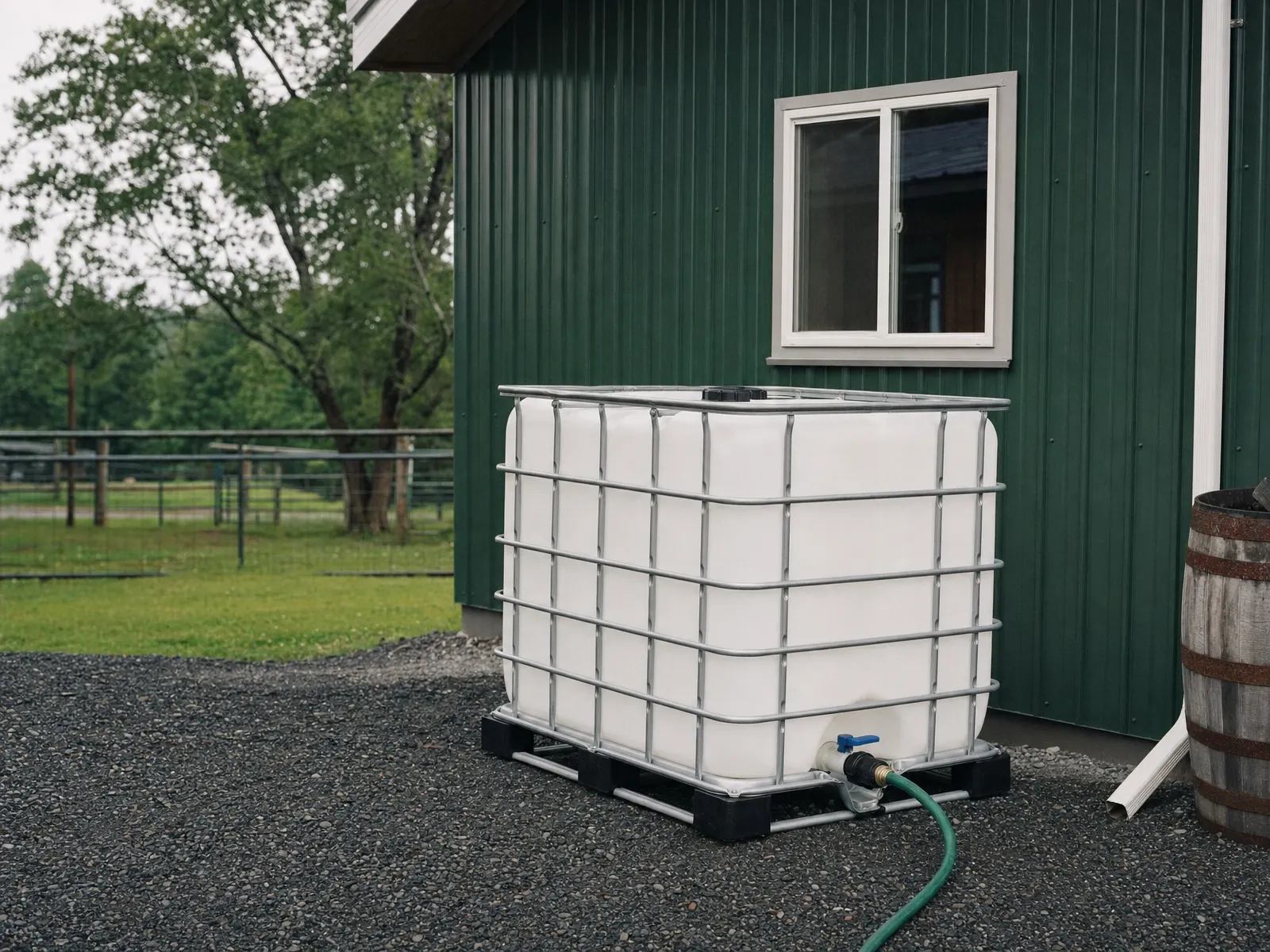
Illustrative image, generated. Not a photograph of our stock or deliveries. New totes for water storage
New, food-contact, no history: for stock water and drinking water.
- Sizes
- 275 and 330 gal
- Bottle
- new, food-contact on request
- Full weight
- about 2,400 lb (275)
- Footprint
- 48 x 40 in
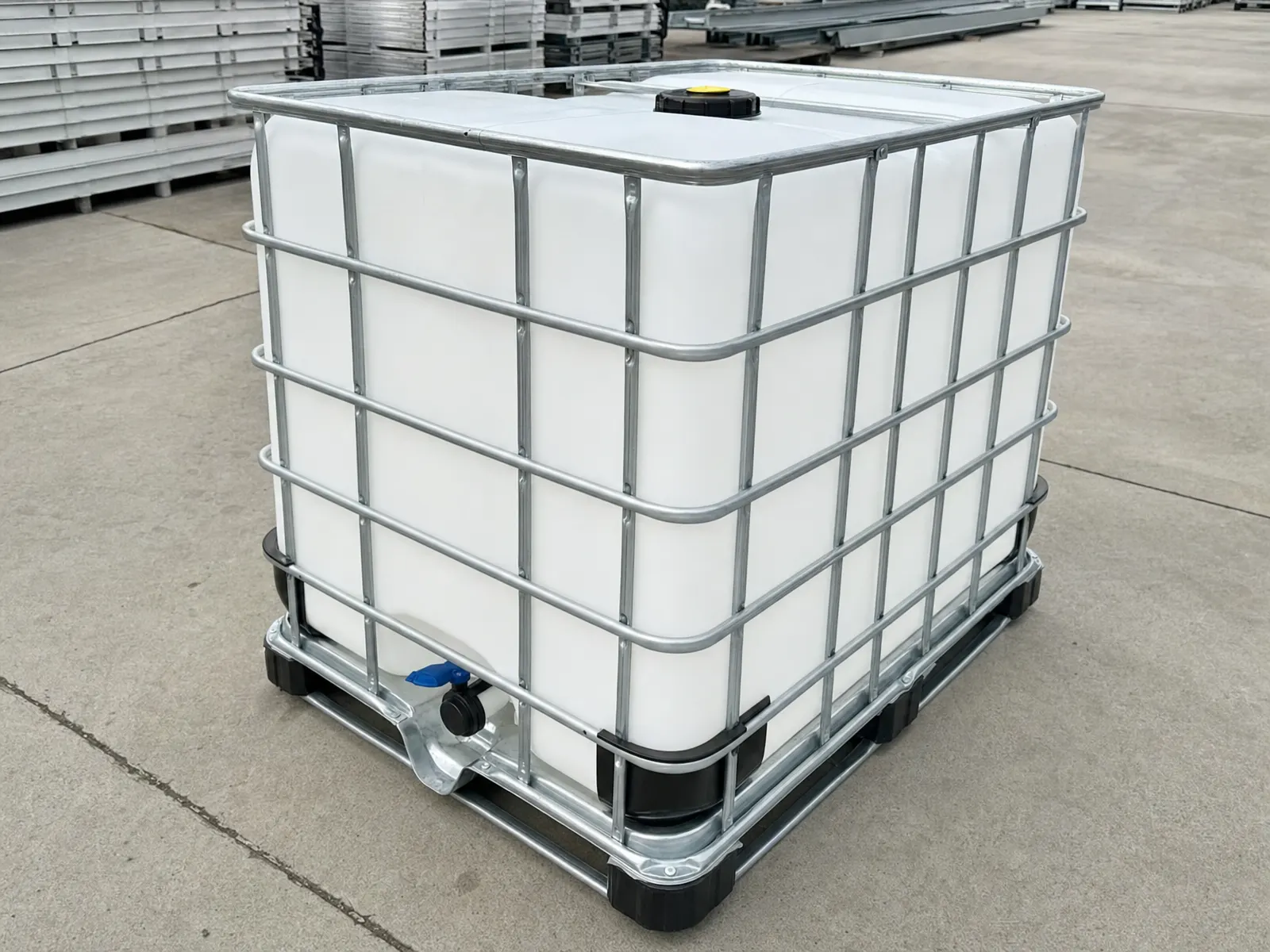
Illustrative image, generated. Not a photograph of our stock or deliveries. New 275 gallon IBC tote
Fits most pickup beds and small trailers; about 2,430 lb full of water.
- Capacity
- 275 gal / 1,040 L
- Footprint
- 48 x 40 in
- Height
- about 46 in
- UN code
- 31HA1/Y
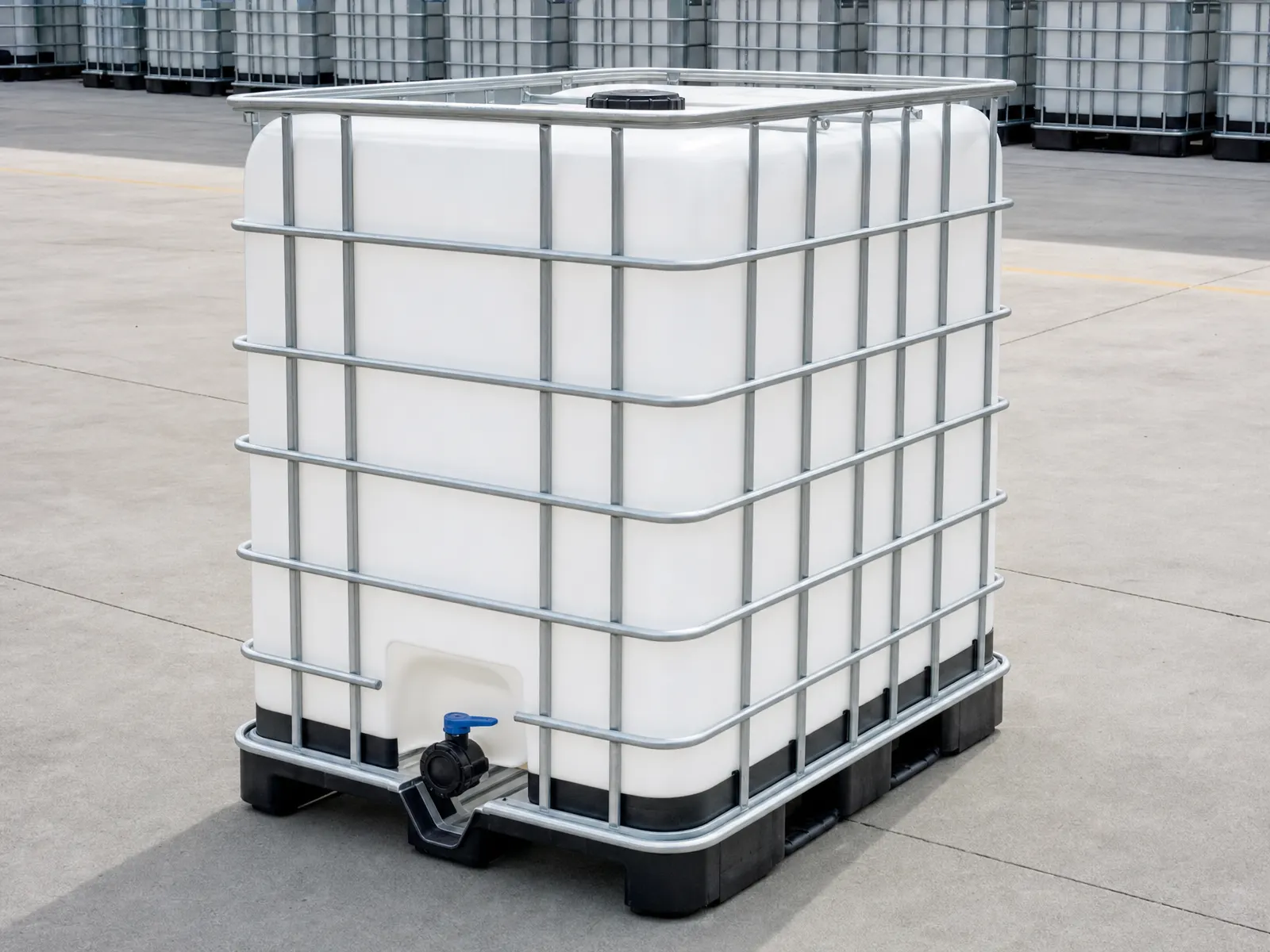
Illustrative image, generated. Not a photograph of our stock or deliveries. New 330 gallon IBC tote
More water per trip if the trailer can carry about 2,910 lb.
- Capacity
- 330 gal / 1,250 L
- Footprint
- 48 x 40 in
- Height
- 53 to 54 in
- Tare
- about 155 lb
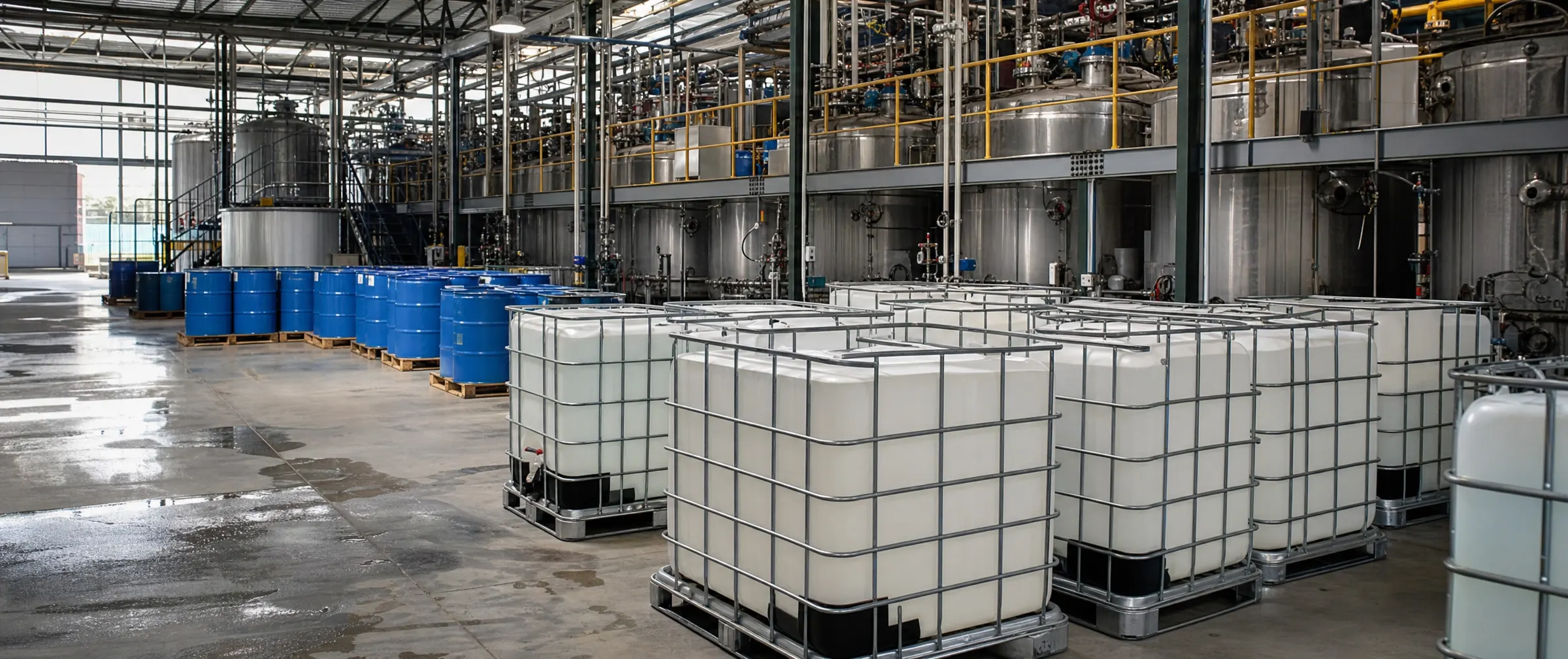
Illustrative image, generated. Not a photograph of our stock or deliveries. UN-rated chemical totes
For liquid fertilizers and crop inputs the supplier ships as regulated.
- UN code
- 31HA1/Y
- Packing groups
- II and III
- Specific gravity
- 1.6 or 1.9
- Retest
- every 2.5 years
Questions from farm and ranch buyers
- Can two totes be joined?
- Yes. Link the bottom valves with a hose and matching fittings and set both totes level on firm ground, so they fill and draw down together instead of one overflowing.
- Will a tote of stock water freeze?
- Yes, in a hard winter. Keep it sheltered or insulated, or drain it and leave the valve open before a deep freeze, since ice can split the bottle.
- Is a used tote safe for cattle water?
- Only if you know it held nothing harmful. A tote that held a herbicide or chemical can leach traces. A new food-contact tote ends the question.
- Will a tote fit in a pickup bed?
- A 275 is about 48 × 40 × 46 in. Check the width between your wheel wells, the bed length and the payload before ordering.
- How do you deliver to a farm?
- One to four totes usually come on a liftgate truck. A full load needs a forklift or telehandler on site. Tell us what you have.
Also read: Drinking water, Rainwater, Weight, empty and full, Meat and poultry. All industries.
Quote totes for farm and ranch
Say what the totes are for (stock water, drinking water, rain or crop inputs), how many, the ZIP and whether you have a forklift or need a liftgate.