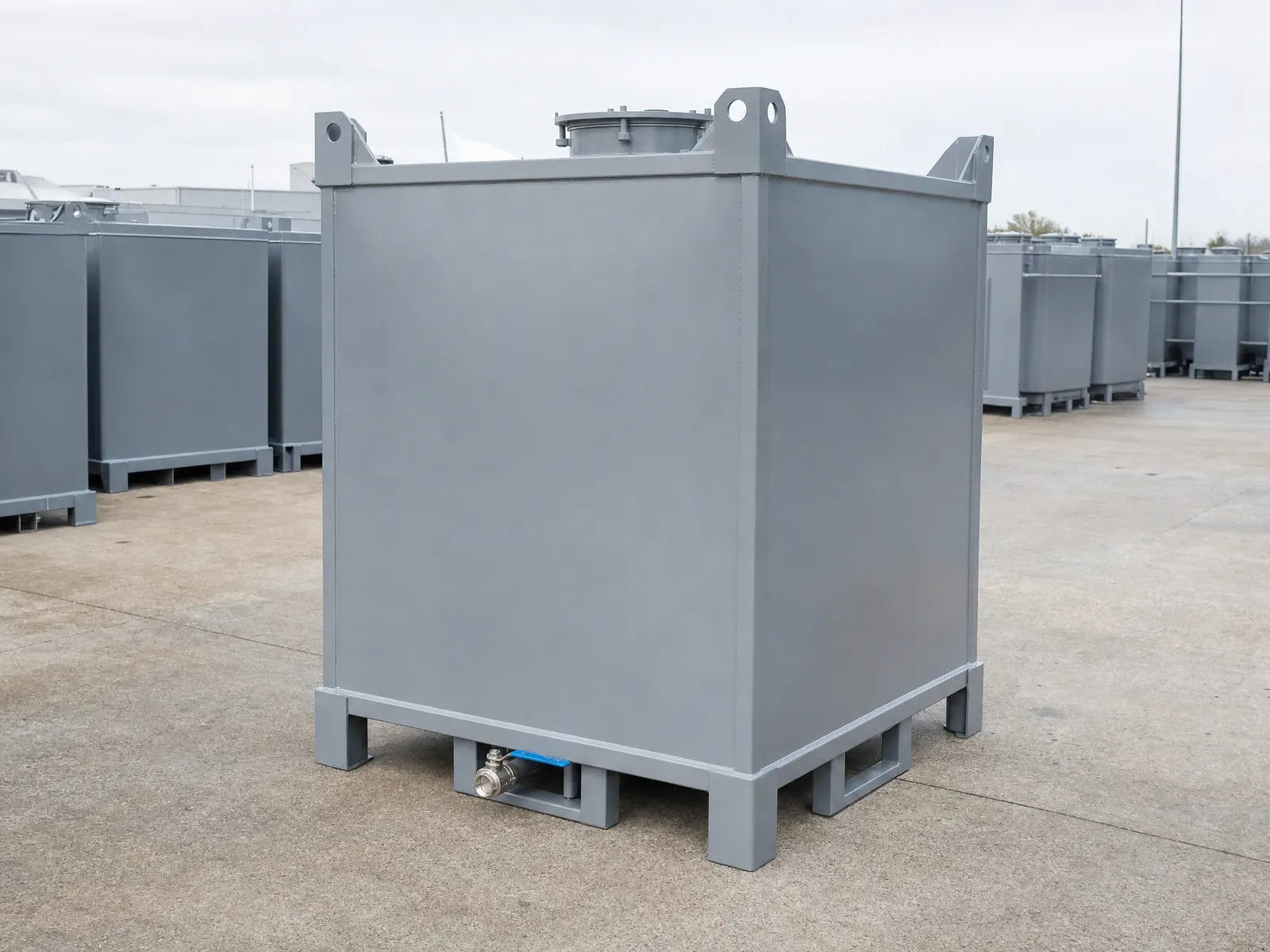
Carbon steel and metal IBCs
For solvents, fuels and other flammable or combustible liquids that need a metal container, where stainless would be more than the product needs.
| UN code | 31A, metal IBC for liquids |
|---|---|
| Shell | Carbon steel, usually painted or lined outside |
| Approval | Often UL 142 for on-site storage |
| Liquids | Class I flammables and Class II and III combustibles |
| Fire | Can withstand fire for at least 30 minutes when fitted with a pressure-relief vent |
| Sizes, weights, fittings | By design; the data sheet comes with the quote |
Sources: Wikipedia, Intermediate bulk container; IBCTanks.com, hazardous material storage and NFPA. Last reviewed 2026-11-10.
What to check on delivery
Check the UN31A marking and the month and year of manufacture, the pressure-relief vent and its rating, and the inside of the shell for any lining damage from the trip. Confirm the valve and gasket suit the solvent before the first fill.
When a metal IBC is required
A plastic or composite tote is the wrong container for a Class I flammable liquid. Plastic IBCs holding combustible or flammable liquids can melt or burn fairly quickly and release their whole contents, which spreads a fire (Wikipedia, IBC). Fire guidance accordingly keeps plastic and composite IBCs off Class I flammables, allows listed rigid plastic IBCs for Class II and III combustibles only, and points to metal IBCs for both (IBCTanks.com on NFPA guidance). Metal IBCs fitted with a pressure-relief vent can hold out in a fire for at least 30 minutes.
So the question for a solvent, a fuel additive or a flammable coating isn't caged tote or steel; it's carbon steel or stainless.
Carbon steel or stainless
Carbon steel costs less and is just as strong. It needs a coating outside and sometimes a lining inside, and it can rust if water or a corrosive product sits in it. That makes it a good container for solvents, fuels, oils and many flammable coatings, which don't attack bare steel, and a poor one for water-based or acidic products. Stainless costs more, needs no coating and suits sanitary and corrosive service. Tell us the product and its SDS section 9 (physical properties) and we'll say which suits.
What to tell us
The product and its flash point class, the volume per IBC, how many, whether they are for on-site storage or for shipping, and the delivery ZIP. For storage, say if your fire marshal or insurer asks for a UL 142 listing. We quote the IBC that meets it and send its data sheet: size, tare, gross mass, fittings and vents.
Questions about this tote
- Can a carbon steel IBC hold water-based products?
- Bare carbon steel corrodes in contact with water and many aqueous products, so for those a stainless IBC or a composite tote is the usual choice. Carbon steel suits fuels, oils and many solvents that do not attack bare or painted steel. Check compatibility on the product’s SDS before you order.
- Can you store gasoline in an IBC tote?
- Not in a plastic or composite tote: they must not be used for Class I flammable liquids. A metal IBC is the option, within what your fire code allows.
- What does UL 142 mean on a steel IBC?
- It is a common standard listing for steel tanks used to store flammable and combustible liquids on site. Ask for it if your fire marshal or insurer needs it.
- Does a carbon steel IBC need grounding?
- When it holds or is filled with a flammable liquid, plants normally bond and ground metal containers during transfer to stop static sparks. Ask your safety lead for your site’s procedure; we can quote IBCs with a grounding lug.
- Will diesel rust a carbon steel IBC?
- Diesel and most fuel oils don’t attack bare steel, but water that settles out of them can. Drain any water from the bottom valve and keep the lid closed; a lined or stainless IBC is the choice when water is part of the product.
Guides for this tote
Quote carbon steel IBCs
Say how many, how often and the delivery ZIP. We quote this tote, or tell you if another suits your product better.