New IBC totes delivered in Delaware
Delaware's tote buyers are split between two very different economies. In the south, Sussex County is poultry country: 8,212 meat and poultry processing jobs in 2025, among the highest county totals in the US, and the industry is 2.4% of all private jobs in the state against 0.42% nationally (BLS QCEW 2025). Food manufacturing statewide employed 11,157.
In the north, New Castle County is part of the Philadelphia-Camden-Wilmington metro, where chemical manufacturing employed 28,734 people in 2025; buyers there order rated totes and steel IBCs. Warehousing statewide employed 12,495.
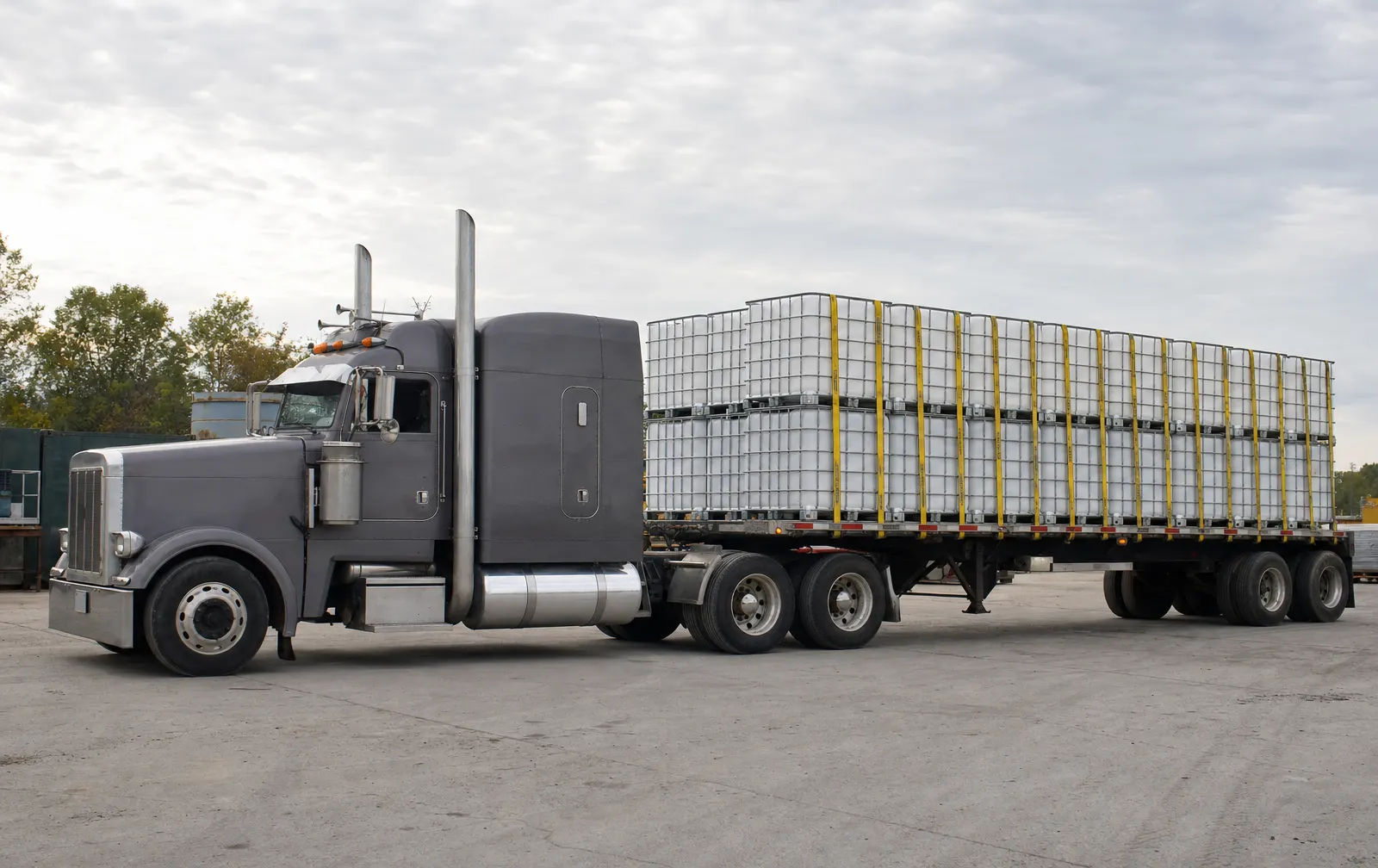
Delivery to Delaware
Northern Delaware is reached on I-95 and I-295 in the same trip as the Philadelphia area. Delmarva poultry plants are a longer run down US 13 and US 113, so a full load spreads the freight best. USDA counted 25 million cubic feet of refrigerated space in the state.
What Delaware buyers usually ask for
Sussex County poultry plants run sanitation every night, and the chemicals they use are often corrosive or oxidising. A rated tote with a vented cap suits those. Totes for brine or ingredients should be food-contact and never swapped across to chemical service. If both kinds come on one truck, ask us to mark them differently so the receiving dock can't mix them up.
Northern Delaware is quickest by I-95. Lewes and Seaford receivers off Route 1 and US 13 are reachable without trouble.
- Food-grade new IBC totesFor Sussex County poultry plants’ brines and liquid ingredients.Bottle resin: 21 CFR 177.1520 · Prior contents: None · Gaskets: EPDM or Viton · Sizes: 275, 330 gal
- UN-rated chemical totesFor sanitation chemicals and for regulated liquids shipped from New Castle County.UN code: 31HA1/Y · Packing groups: II and III · Specific gravity: 1.6 or 1.9 · Retest: every 2.5 years
- Carbon steel and metal IBCsFor solvents and flammable liquids that need a steel IBC.Build: Carbon steel shell · UN code: 31A · Approval: often UL 142 · For: Class I flammables
Not sure which tote? Start from the product. A regulated liquid needs a UN-rated tote marked for its specific gravity.
Anything people eat or drink needs a food-contact bottle; a Class I flammable needs a steel IBC.
Quote totes delivered in Delaware
Give the delivery ZIP in Delaware, the product you will fill, how many totes and how often, and whether the site has a dock or needs a liftgate. If your plant books receiving slots, name the window and any site rules for drivers.