New totes for chemical distributors and blenders
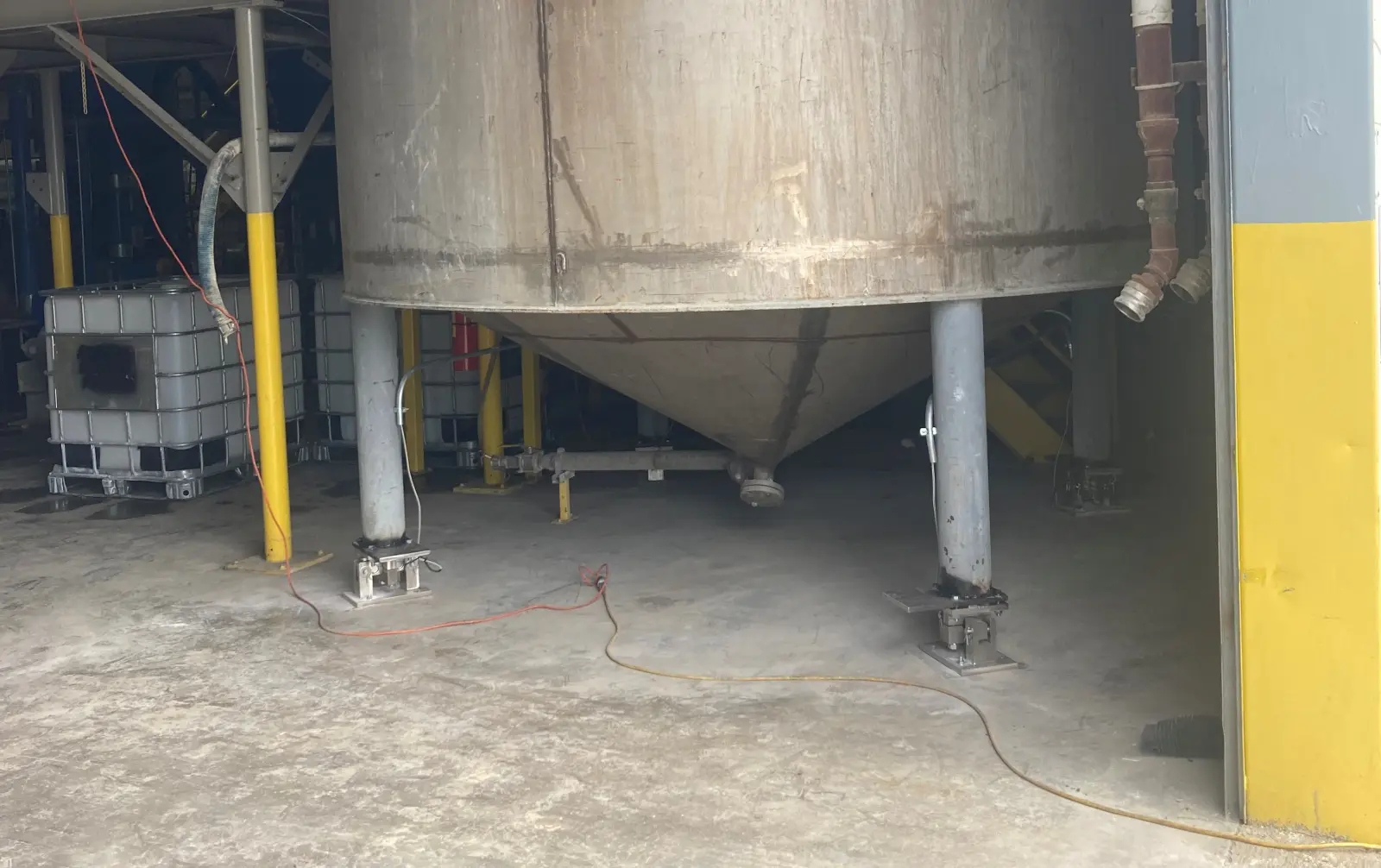

Distributors and blenders repack bulk chemicals into totes that go out to hundreds of customers, so they need UN-rated 31HA1/Y totes with a current date, the right specific gravity rating and a valve every customer can connect to. A new tote gives the customer a clean cage and the shipper the whole 2.5-year retest window.
What goes in the totes
Acids and caustics cut to customer strength, solvents and alcohols (in steel where they are flammable), surfactant and detergent blends, water treatment chemicals, glycols and heat-transfer fluids, sanitizers for food plants, and agricultural chemicals. Much of it is regulated: corrosives, oxidizers and some toxics in Packing Groups II and III.
The tote and the rule
For regulated liquids: 31HA1 with the letter Y and a specific gravity at or above the heaviest product you fill (Y1.6 or Y1.9). No Packing Group I liquid may go in any IBC (49 CFR 173.35(j)). Filled for transport, a tote needs a leakproofness test within 2.5 years of its date (49 CFR 180.352). Class I flammables go in a steel IBC, never a composite tote.
Where the industry is
Distribution follows chemical making and the freight lanes. Chemical manufacturing employed 892,426 people in 2025, most in Texas (90,310), California (75,499), Ohio (49,328), Illinois (48,745) and New Jersey (47,966) (BLS QCEW 2025). The counties along I-80 held 89,877 chemical jobs, I-95 69,043 and I-65 66,307. Port Houston's 2025 cargo included petrochemical and industrial shipments (Port Houston).
Running a tote fleet as a distributor
Most distributors run one tote for many products, so the specification is set by the hardest case: Y1.9 if any product is denser than 1.6, a gasket that suits the most aggressive chemical, and a 2 in camlock with a dust cap so any customer's hose fits. Totes that come back are the distributor's to test, inspect and keep records for (180.352(g)). Totes sent one-way leave that work with the customer. Buying new at a steady rhythm keeps every tote in the yard on a recent date, so none of them comes due for a retest while it is out with a customer.
Totes we would quote
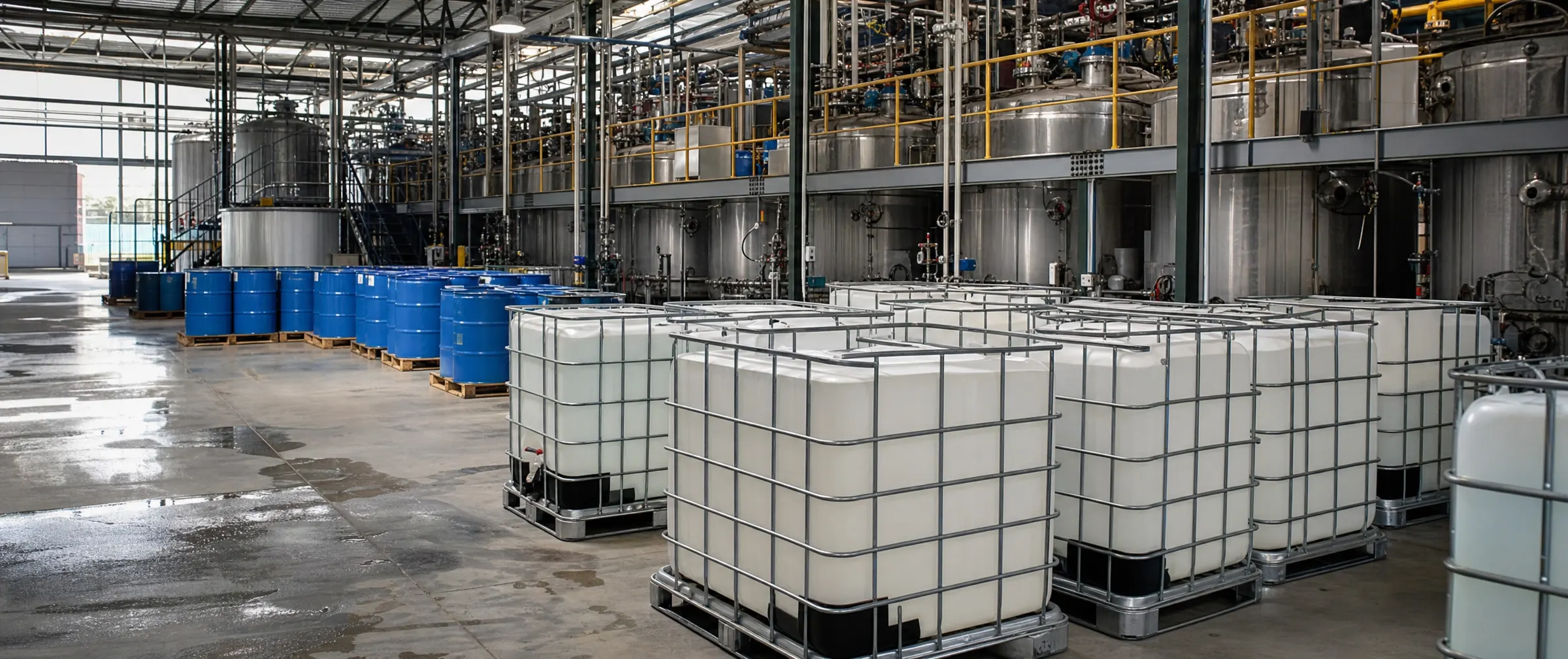
Illustrative image, generated. Not a photograph of our stock or deliveries. UN-rated chemical totes
The core of a distributor’s order: 31HA1/Y at the specific gravity your heaviest product needs, dated this year.
- UN code
- 31HA1/Y
- Packing groups
- II and III
- Specific gravity
- 1.6 or 1.9
- Retest
- every 2.5 years
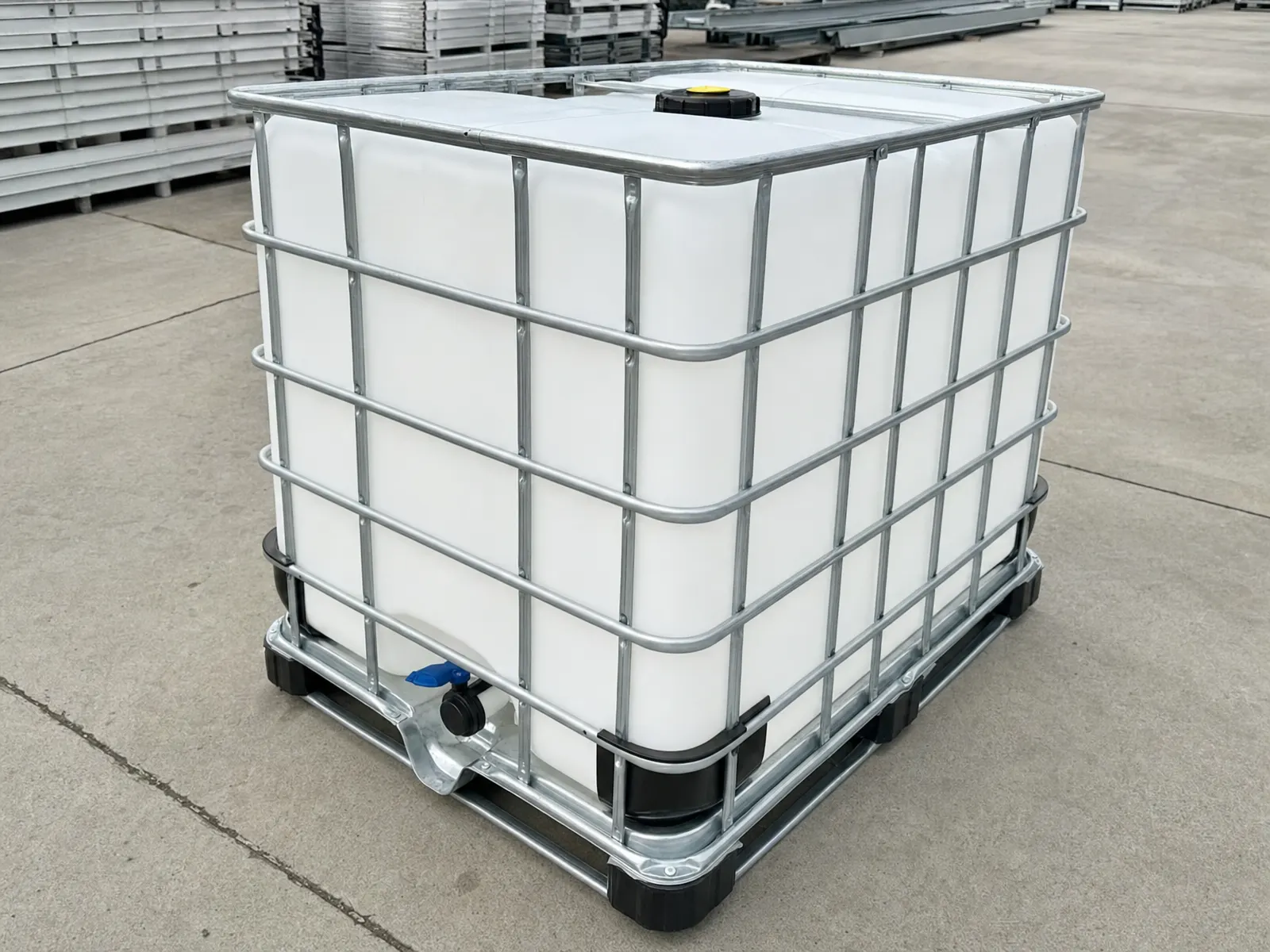
Illustrative image, generated. Not a photograph of our stock or deliveries. New 275 gallon IBC tote
The size most customers’ stands, pumps and containment are built around.
- Capacity
- 275 gal / 1,040 L
- Footprint
- 48 x 40 in
- Height
- about 46 in
- UN code
- 31HA1/Y
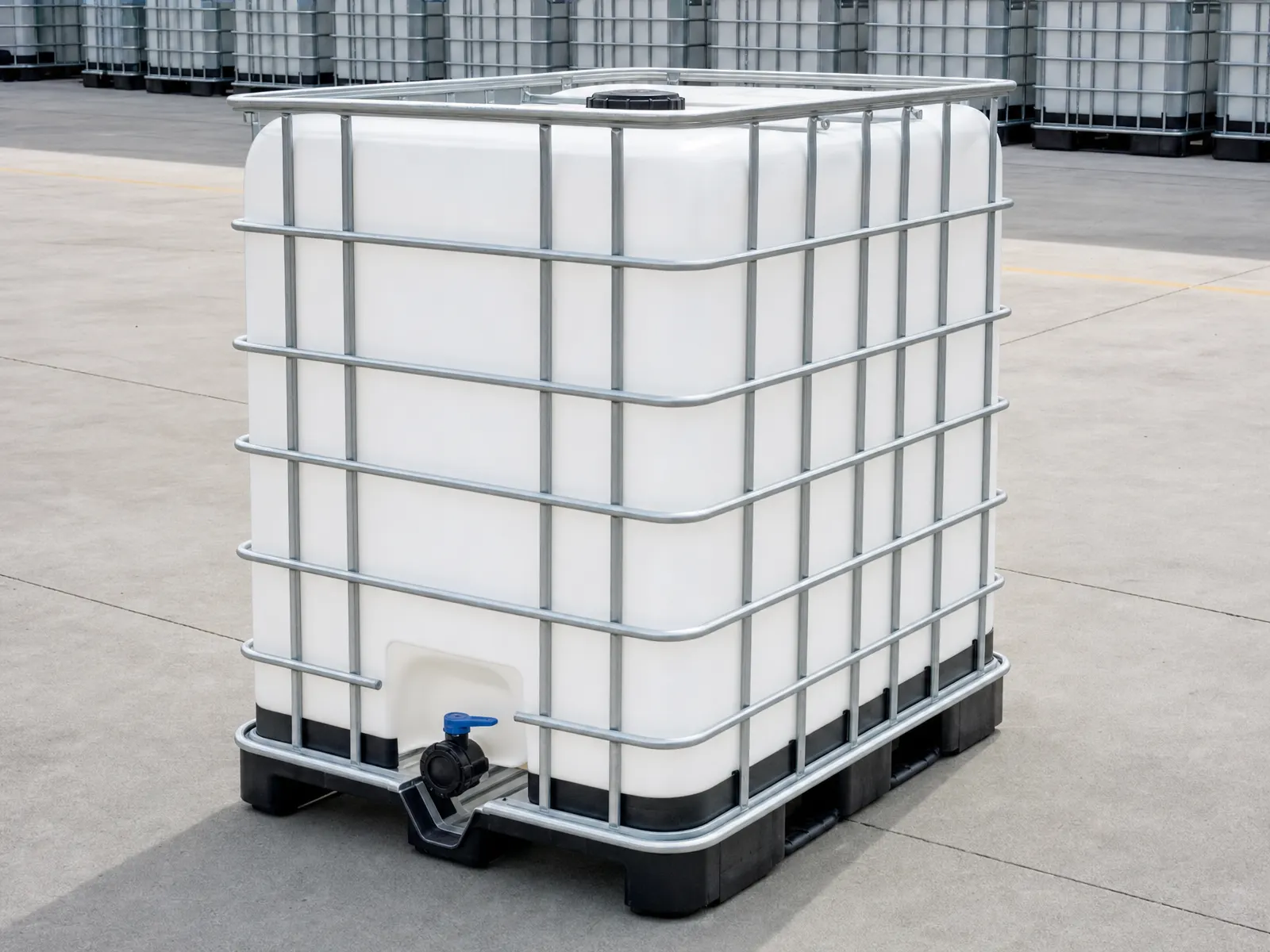
Illustrative image, generated. Not a photograph of our stock or deliveries. New 330 gallon IBC tote
55 gallons more per pallet position, for customers with the height and forklift for it.
- Capacity
- 330 gal / 1,250 L
- Footprint
- 48 x 40 in
- Height
- 53 to 54 in
- Tare
- about 155 lb
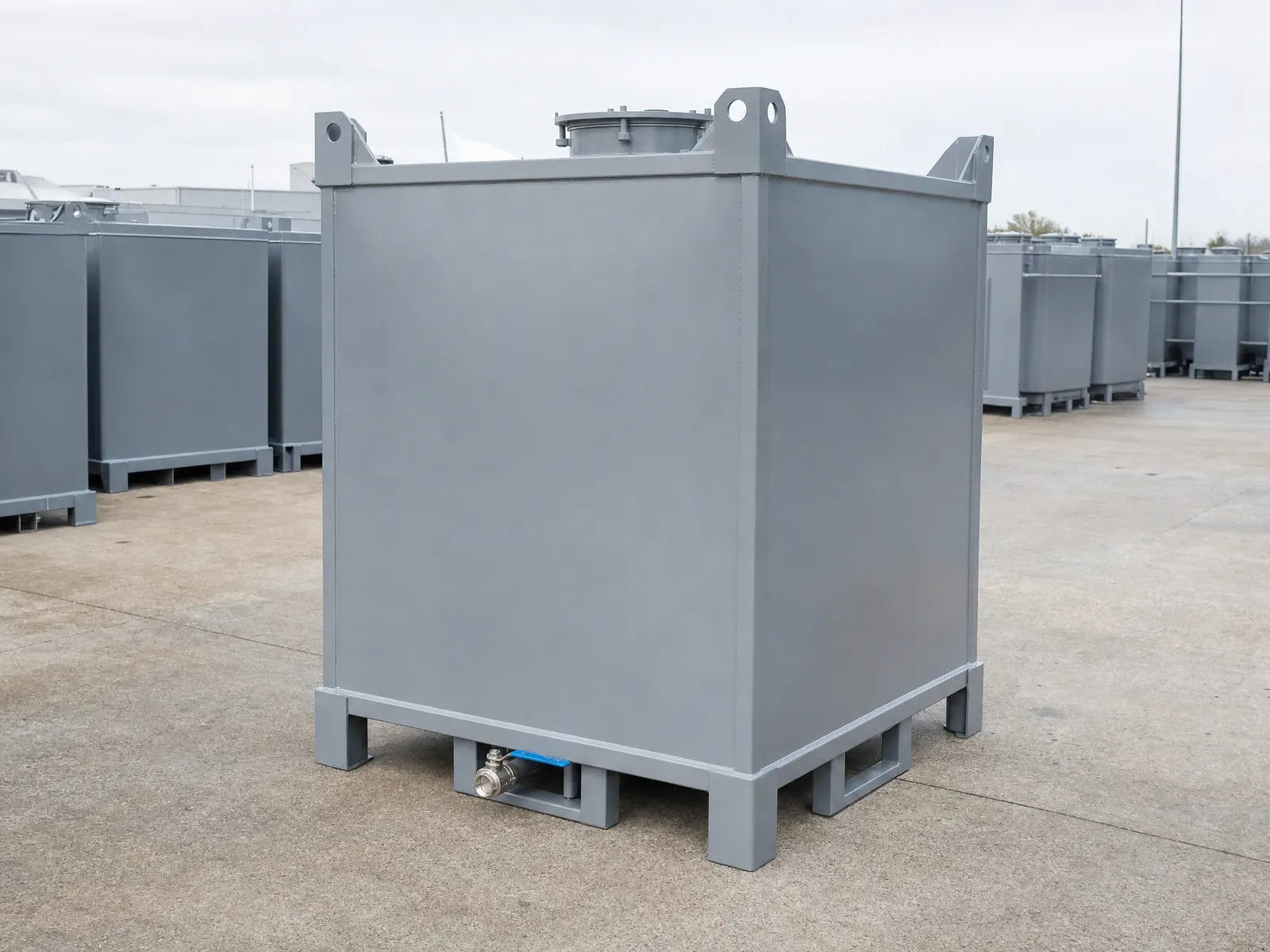
Illustrative image, generated. Not a photograph of our stock or deliveries. Carbon steel and metal IBCs
For the flammable solvents and alcohols a composite tote must not hold.
- Build
- Carbon steel shell
- UN code
- 31A
- Approval
- often UL 142
- For
- Class I flammables
Questions from chemical distribution buyers
- Which rating should a distributor stock?
- Y1.9 covers every product up to a specific gravity of 1.9, so one rated tote serves the whole range. If nothing you ship is denser than 1.6, Y1.6 does.
- Do we need a different gasket for each product?
- Not if one material suits them all. EPDM suits most water-based acids and caustics; Viton suits oils and many solvents. Tell us the product list and we’ll quote the gasket that covers it.
- Can we get totes on a schedule?
- Tell us how many you fill a month and how often you want a load, and the quote is set up for that rhythm.
Also read: Reading the UN marking, Y1.6 or Y1.9, Buying by the truckload, Chemical manufacturing. All industries.
Quote totes for chemical distribution
Give the products (or the heaviest and most aggressive of them), the rating, the valve and outlet your customers use, how many totes a month and the delivery ZIP.