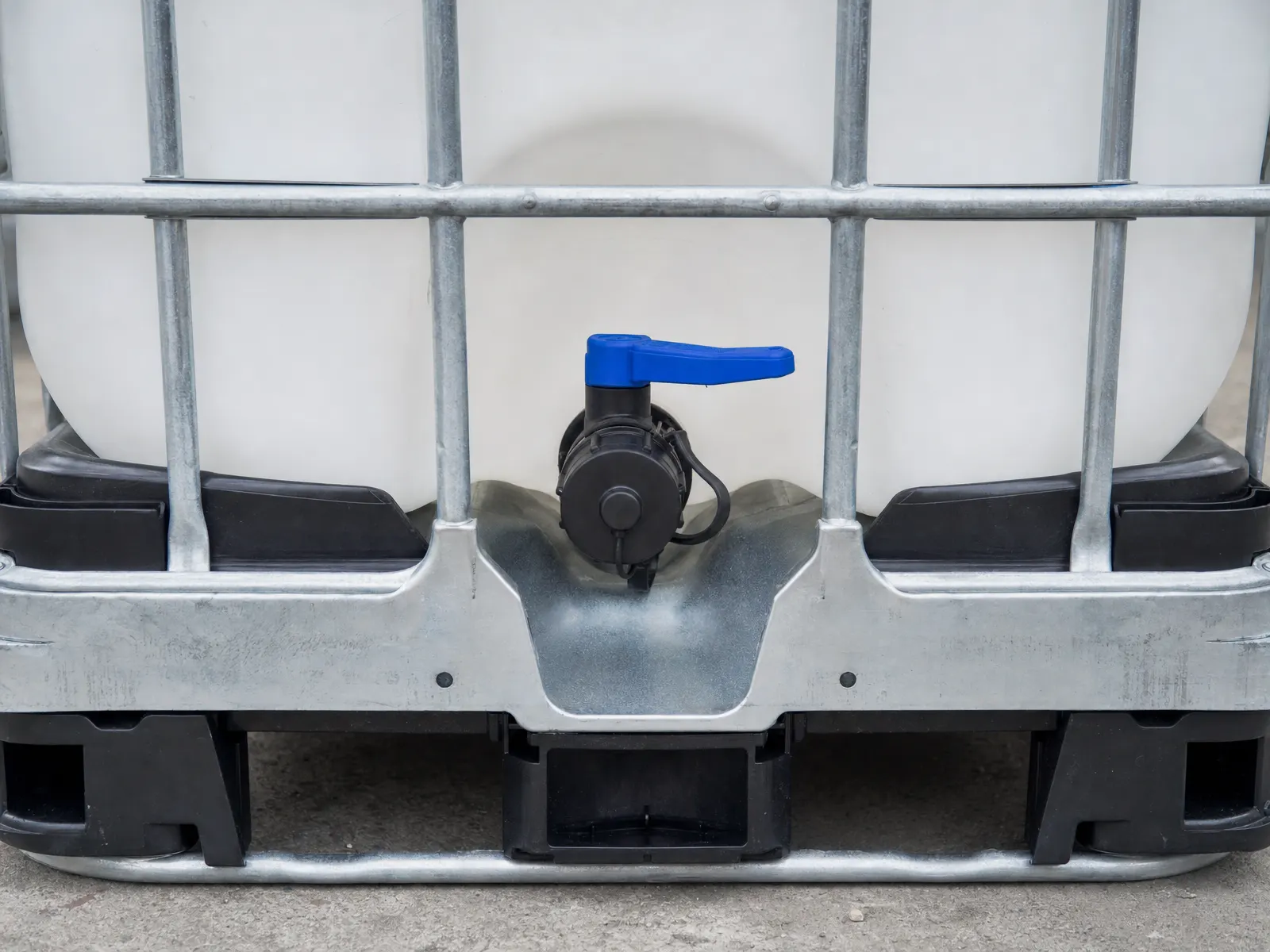
Caged composite IBC totes, new
The everyday tote: a plastic bottle for the product, a steel cage for the strength. This page explains the build; the size pages carry each spec.
| UN code | 31HA1: composite IBC, rigid plastic inner receptacle, steel outer packaging, for liquids |
|---|---|
| Bottle | High-density polyethylene (HDPE), new |
| Cage | Galvanized steel tube, new |
| Pallet | New composite pallet; forks from four sides |
| Sizes | 135, 275 (1,040 L) and 330 gal (1,250 L) |
| Ratings | Y for Packing Group II and III; specific gravity 1.6 or 1.9 |
| Footprint | 48 x 40 in on the 275 and 330 |
Sources: 49 CFR 178.702, IBC codes; Container Exchanger, 330 gal tote dimensions; Mauser Packaging Solutions, composite IBCs; Wikipedia, Intermediate bulk container. Last reviewed 2026-11-13.
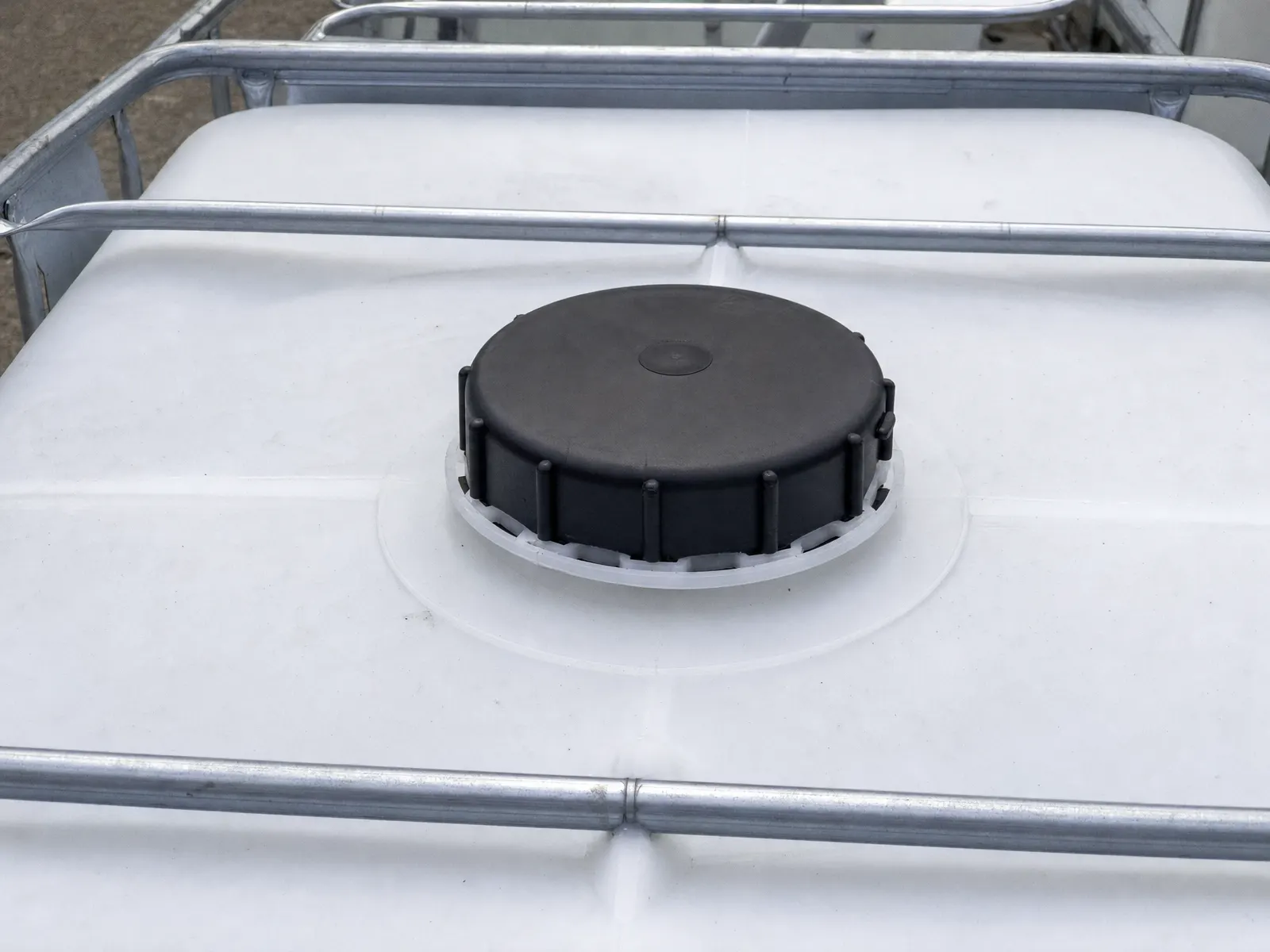
What to check on delivery
On every caged tote, the plate is on the cage's front panel. Read the code (31HA1), the packing group letter, the month and year of manufacture and the maximum gross mass. Look along the cage for bent bars and at the pallet for cracks from the trip; a new tote should arrive straight and clean.
Two parts doing two jobs
A caged composite tote splits the work. The bottle is moulded HDPE, which most chemicals, foods and water don't attack, and which is light and cheap enough to make in one piece. The cage is galvanized steel tube welded into a frame around it: it holds the bottle's shape when it is full, takes the load when totes are stacked, gives the forks something solid to lift and protects the bottle from knocks. The pallet underneath, composite on new totes, lets a forklift or pallet jack take it from any side.
The rules name it by those parts. Under 49 CFR 178.702, 31HA1 means an IBC for liquids (31), with a rigid plastic inner receptacle (H) in a steel outer packaging (A). When a buyer asks for a "31HA1 tote", this is it.
Why the new cage matters
The cage is where a used tote shows its age: bent bars, flaking zinc, rust at the welds, a pallet with a cracked runner. Rebottling puts a new bottle into a used cage, which is often fine for water or a non-hazardous product, but the cage is the part that carries a stack. A new tote has bright, unweathered galvanizing with the zinc spangle still visible, straight bars and a pallet that has never been dropped. For a tote that goes out to a customer with your label on it, that is what they see first.
Choosing the size and rating
The build is the same across sizes; pick the size from your batch and your floor, and the rating from your product. The 275 gallon tote is the standard 1,000 litre size. The 330 gallon tote holds 55 gallons more on the same base. The 135 gallon tote is for small batches. For hazmat, ask for the packing group letter and the specific gravity your product needs; the specific gravity guide explains the numbers.
Questions about this tote
- Can full caged totes be stacked?
- Often two high, but only within the stacking test load marked on the plate, in kilograms. Check it against the weight of a full tote of your product before you stack.
- What does 31HA1 mean?
- A composite IBC for liquids with a rigid plastic inner receptacle (H) and a steel outer packaging (A), under 49 CFR 178.702.
- What is the cage of an IBC tote made of?
- Galvanized steel tube. It keeps the HDPE bottle rigid, carries the stacking load and gives the forks a solid surface.
Guides for this tote
Quote new caged totes
Say how many, how often and the delivery ZIP. We quote this tote, or tell you if another suits your product better.