New totes for meat and poultry processors
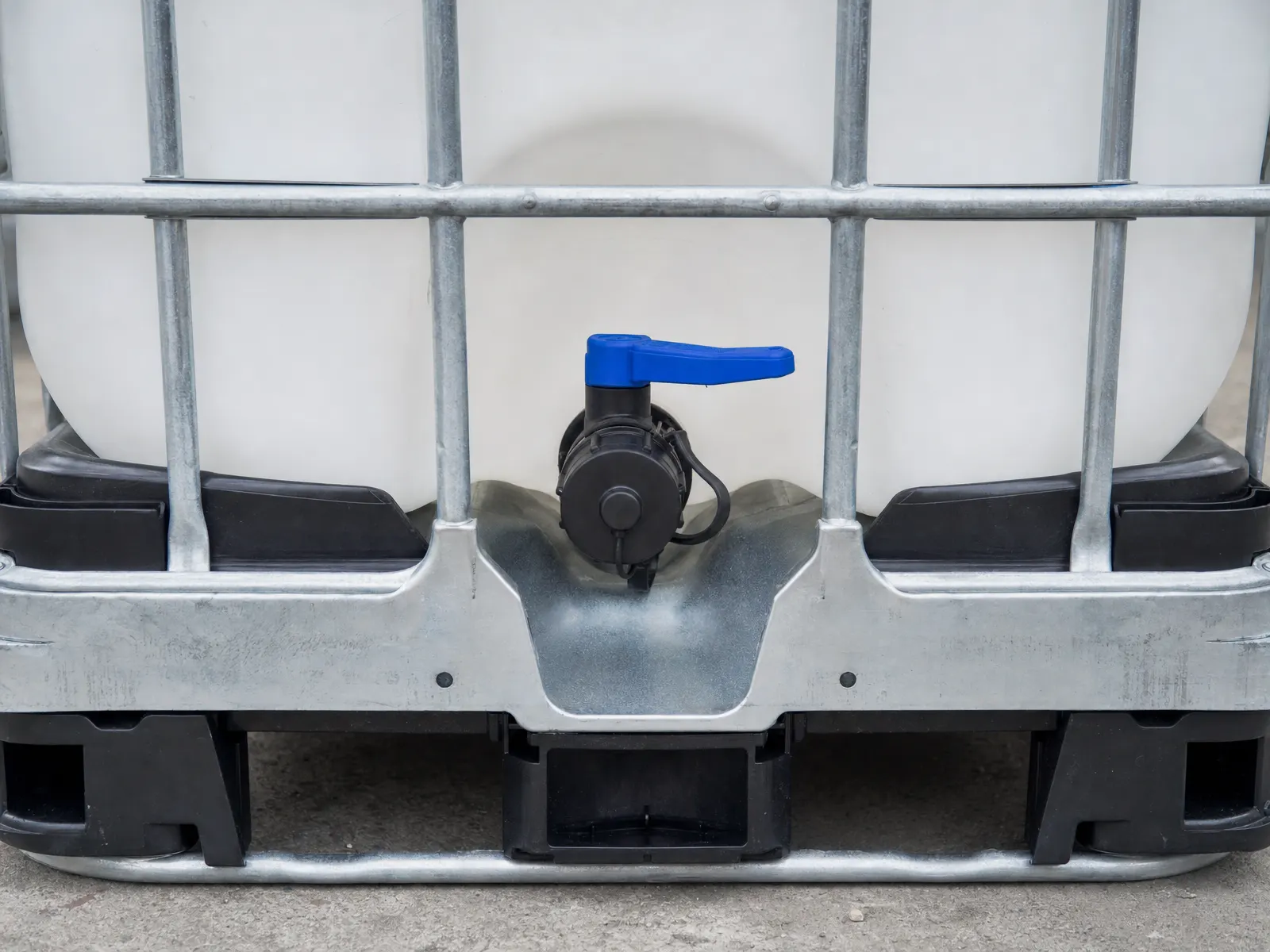
Meat and poultry plants use totes for two very different things: food-contact brines, cures and marinades on the line, and the corrosive and oxidizing sanitation chemicals their night crews use. They need a food-contact tote stock and a UN-rated one, never mixed.
What goes in the totes
Brines and cure solutions, phosphate blends, marinades and liquid seasonings, liquid smoke, rendered fats and oils; and on the sanitation side, chlorinated and caustic cleaners, acid descalers and sanitizers including peroxide-based ones.
The tote and the rule
Food-contact products need a bottle under 21 CFR 177.1520 with food-contact gaskets and no history. Sanitation chemicals in transport need UN-rated 31HA1/Y totes at the right specific gravity. Peroxide-based sanitizers give off gas, so they need a vented cap (caps and vents). Chlorinated products attack some gaskets; match the material.
Where the industry is
Meat and poultry processing employed 556,647 people at 4,689 establishments in 2025: Texas 44,780, Georgia 42,030, North Carolina 35,715, Arkansas 34,773 and Iowa 33,386 (BLS QCEW 2025). It is 3.7% of Nebraska's private jobs and 3.1% of Arkansas's. Hall County, Georgia (11,123) and Sussex County, Delaware (8,212) were among the leading counties.
Sanitation crews and tote handling
Sanitation chemicals are usually dispensed from totes in a chemical room by pump or by a dilution system connected at the valve. A camlock outlet that only the chemical hoses fit, and a different one on the food totes, keeps the two from being connected by mistake. A UN-rated tote of a dense chlorinated cleaner can be close to its gross mass when full; check the plate.
Totes we would quote
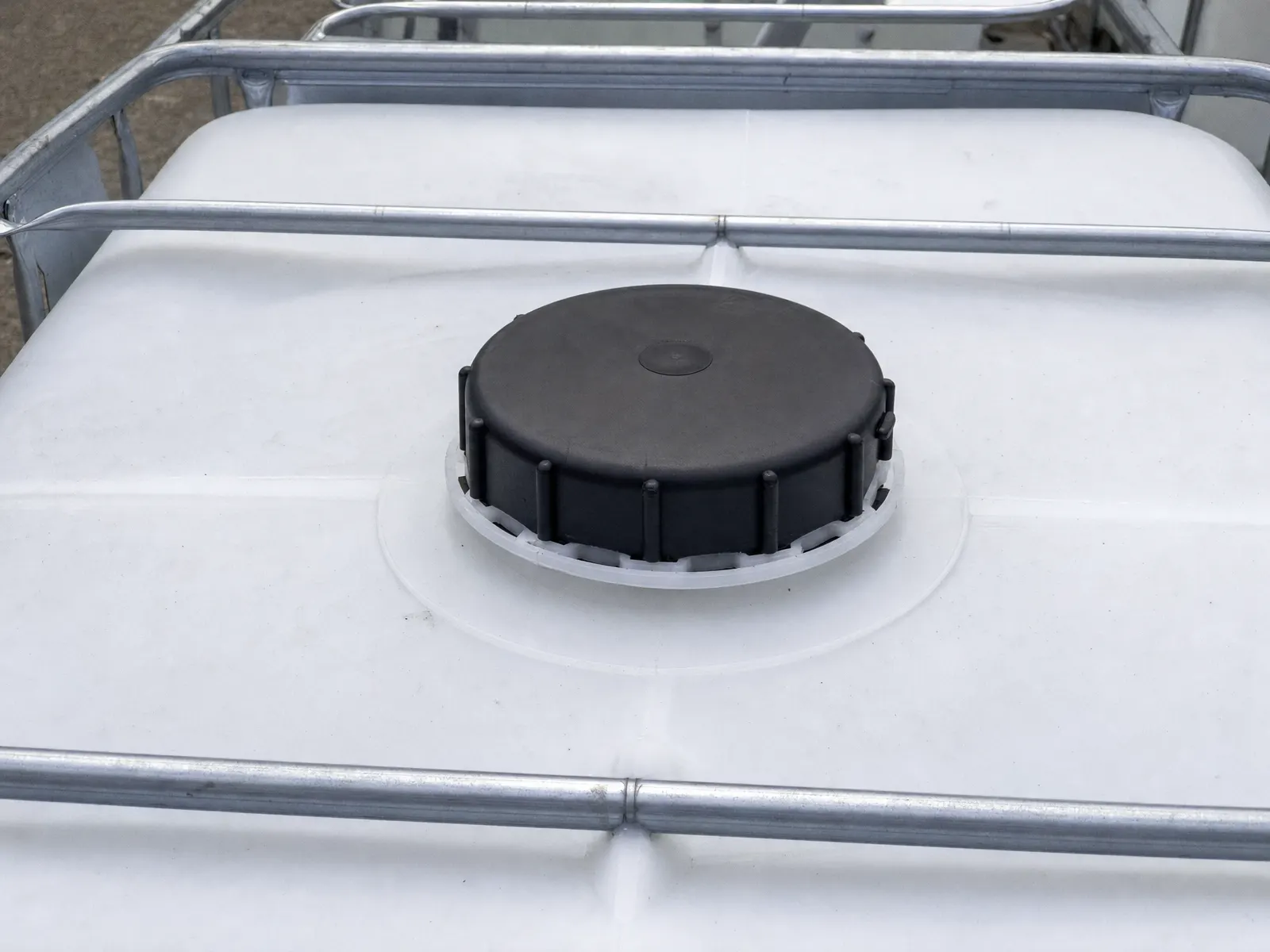
Illustrative image, generated. Not a photograph of our stock or deliveries. Food-grade new IBC totes
For brines, cures and marinades on the line.
- Bottle resin
- 21 CFR 177.1520
- Prior contents
- None
- Gaskets
- EPDM or Viton
- Sizes
- 275, 330 gal
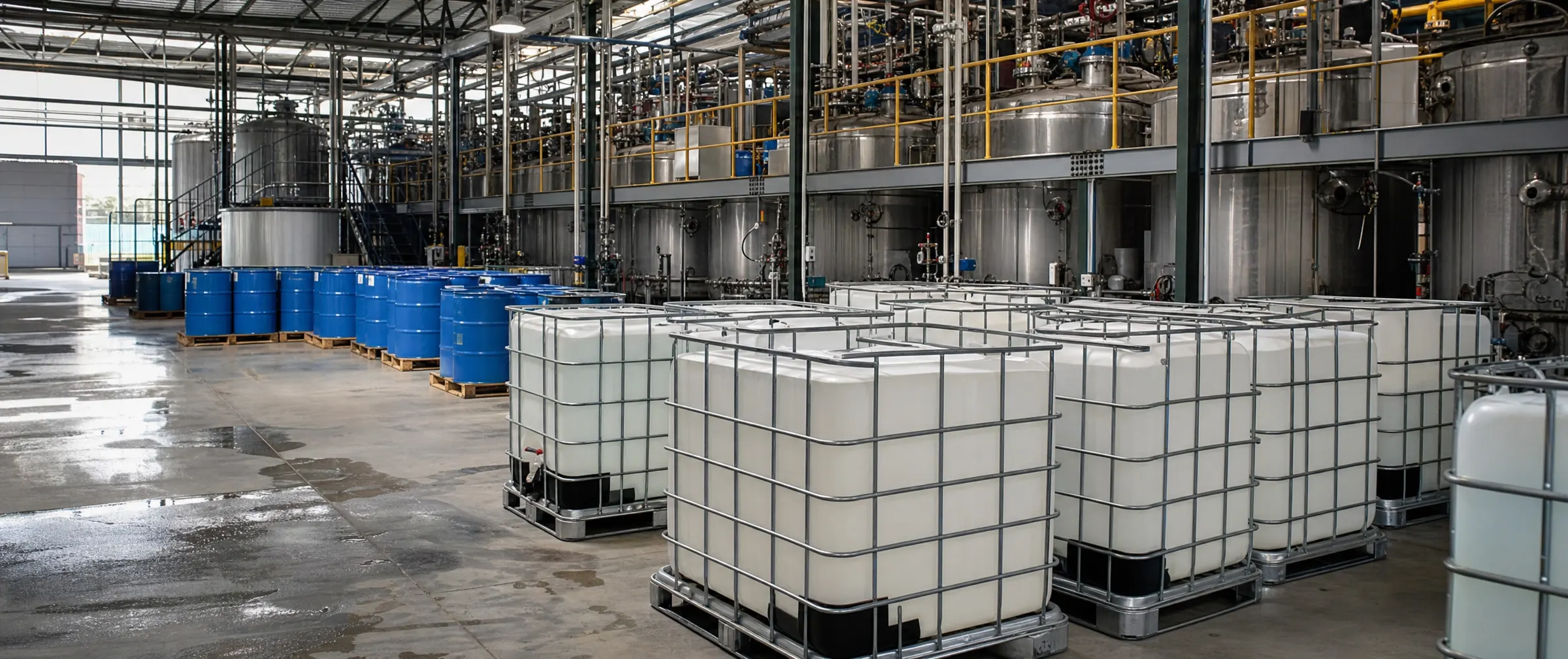
Illustrative image, generated. Not a photograph of our stock or deliveries. UN-rated chemical totes
For the corrosive and oxidizing sanitation chemicals, with a vented cap where needed.
- UN code
- 31HA1/Y
- Packing groups
- II and III
- Specific gravity
- 1.6 or 1.9
- Retest
- every 2.5 years
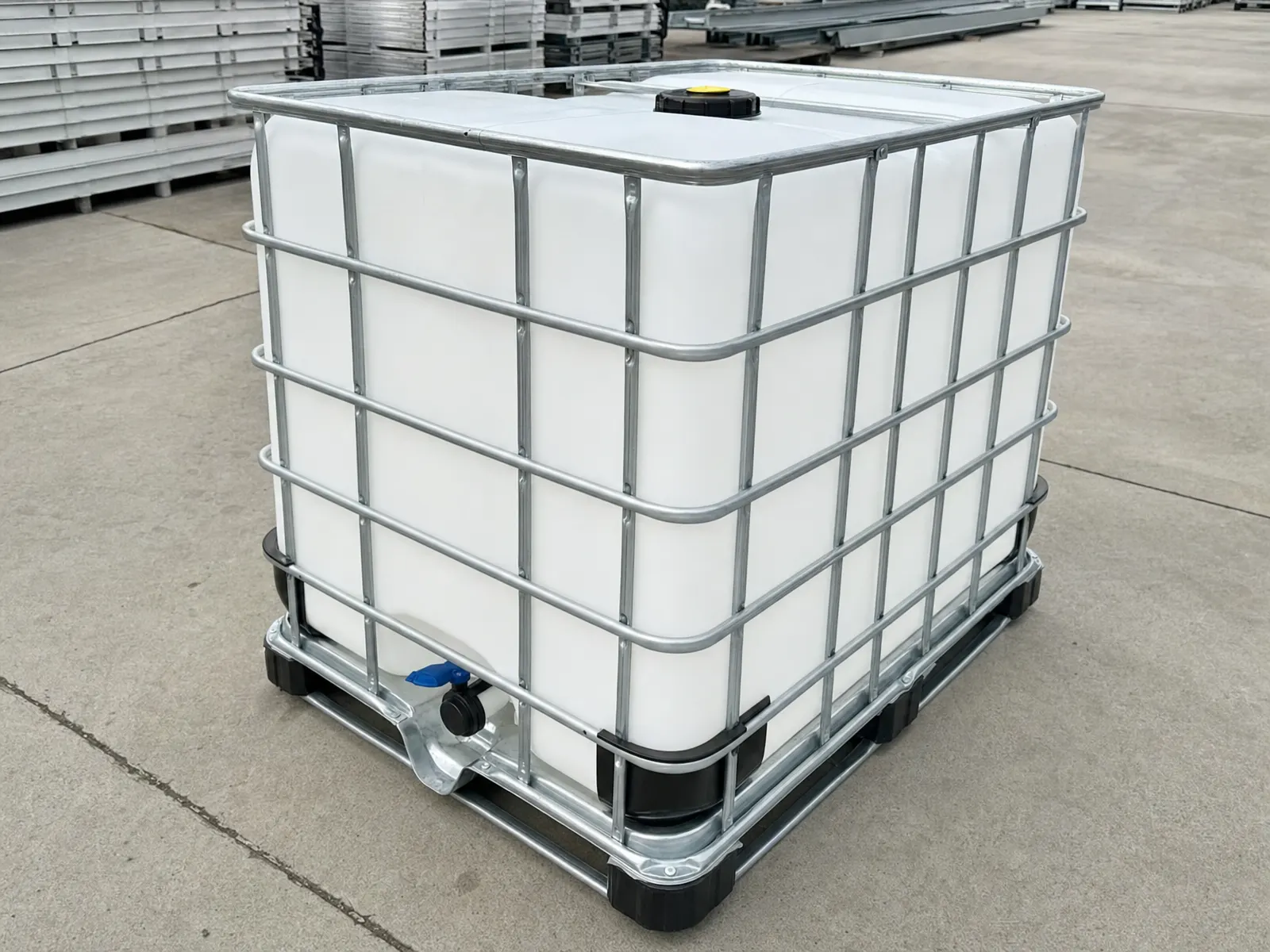
Illustrative image, generated. Not a photograph of our stock or deliveries. New 275 gallon IBC tote
The size chemical-room pumps and dilution systems usually connect to.
- Capacity
- 275 gal / 1,040 L
- Footprint
- 48 x 40 in
- Height
- about 46 in
- UN code
- 31HA1/Y
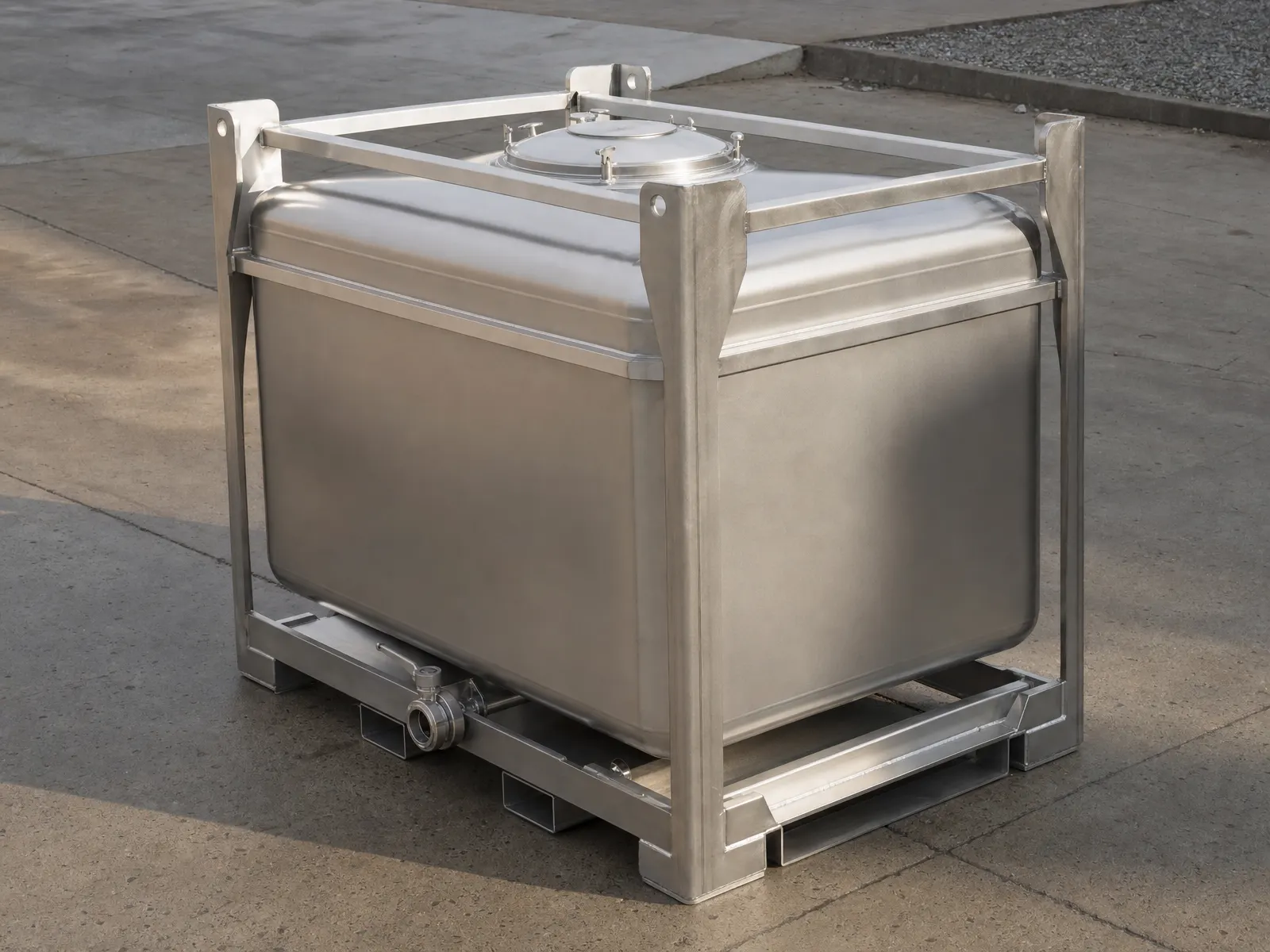
Illustrative image, generated. Not a photograph of our stock or deliveries. Stainless steel IBC totes
For warm brines and products held between steps.
- Steel
- 304, 10 gauge
- Finish
- 2B
- UN code
- 31A
- Sizes
- 350, 550, 793 gal
Questions from meat and poultry buyers
- Do sanitizers need a vented cap?
- Peroxide-based sanitizers give off oxygen as they stand and need a vented cap. Check the supplier’s guidance for others.
- Can a brine tote be reused?
- For the same brine, after cleaning, if your food safety plan allows. Never refill a food tote with a chemical, or the other way round.
- Which gasket for a chlorinated cleaner?
- It depends on the product; some compounds resist chlorine better than others. Give us the SDS and we’ll quote a suitable one.
Also read: Caps, lids and vents, Food grade or not, Y1.6 or Y1.9, Nebraska. All industries.
Quote totes for meat and poultry
Say whether the totes are for food products or sanitation chemicals, the product, vented or not, the outlet, how many and the plant ZIP.