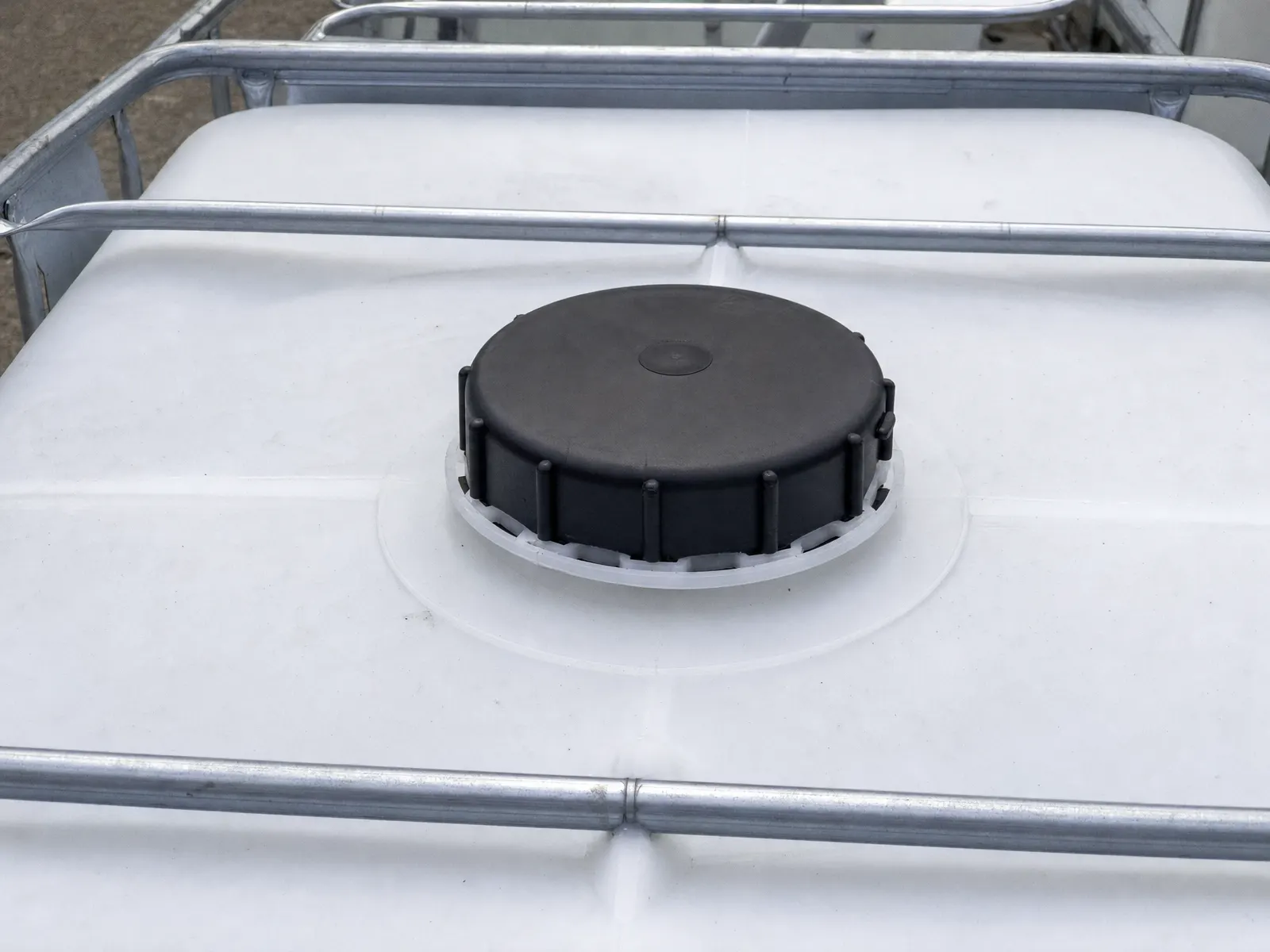
Food-grade new IBC totes
For food, beverage and ingredient plants whose QA team signs off only on a first-use, food-contact bottle.
| Bottle | New HDPE moulded from resin that meets 21 CFR 177.1520 for food contact |
|---|---|
| Prior contents | None. First fill is yours |
| Sizes | 275 gal (1,040 L) and 330 gal (1,250 L); 135 gal on request |
| Gaskets | EPDM or Viton; ask for food-contact compounds |
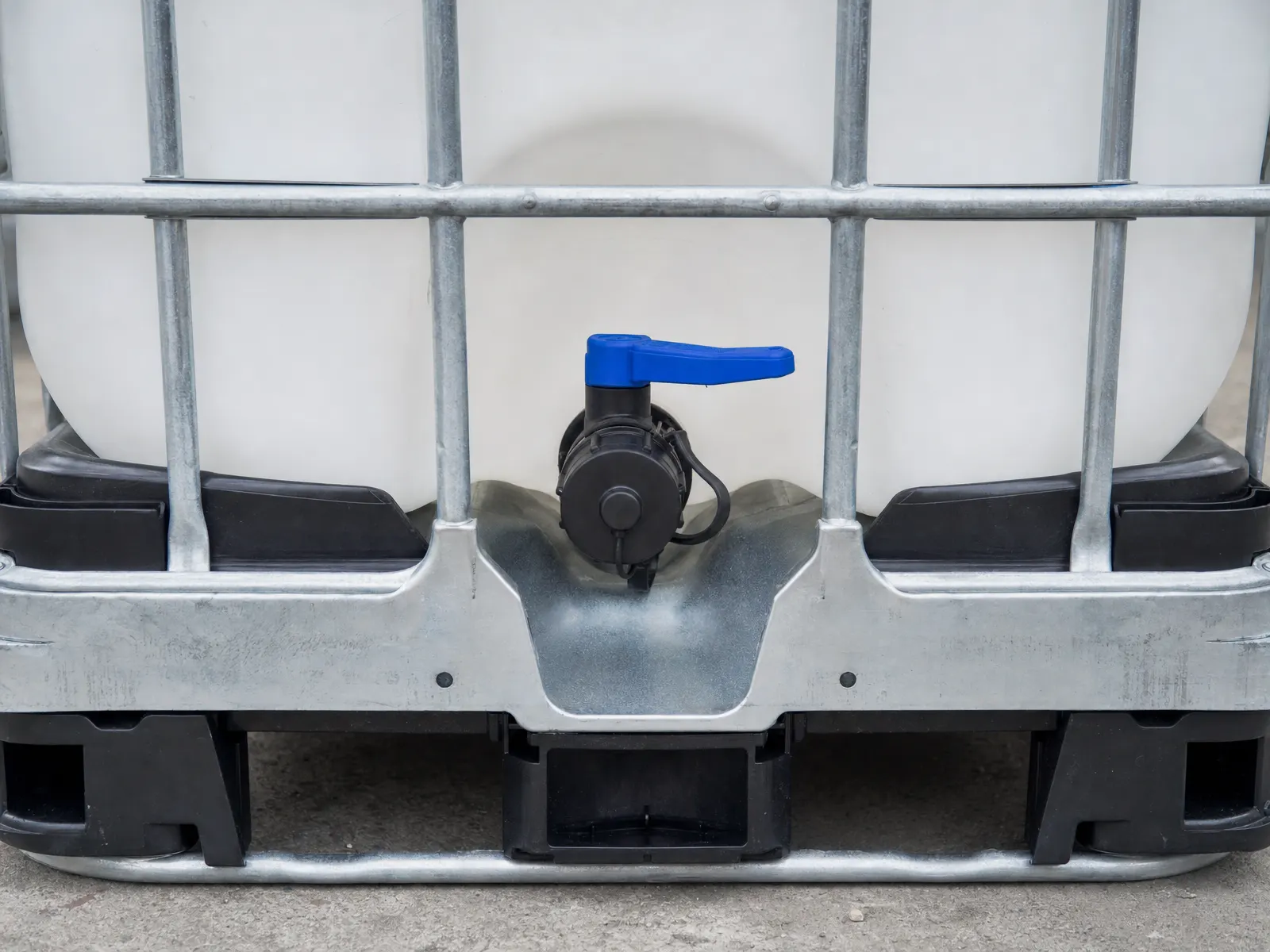
| Valve | 2 in butterfly or ball; outlet to match your hose |
| Cage and pallet | New galvanized cage, new composite pallet |
| Paperwork | The maker’s food-contact statement for the bottle, sent with the quote |
Sources: 21 CFR 177.1520, olefin polymers in food contact; CDC, creating and storing an emergency water supply. Last reviewed 2026-11-11.
What to check on delivery
On delivery, keep the fill cap's tamper band and the valve's dust cap intact until the tote is at the filling station. Check the plate's month and year, look into the bottle against the light (a new food-contact bottle is clean, dry and odourless) and file the paperwork with the lot.
What makes a tote food grade
Two things: the material that touches the food, and what the container has held. The bottle has to be moulded from a resin cleared for food contact; for polyethylene that is the list of olefin polymers in 21 CFR 177.1520. The gaskets in the cap and valve touch the product too, so they need food-contact compounds as well. And the tote must never have held anything that isn't food.
A new bottle settles the second question outright. A used tote can only be food grade if its whole history is documented as food, which is why so many QA teams skip the argument and buy new. CDC's advice on storing drinking water says the same in plain terms: use food-grade containers, and never one that held toxic chemicals (CDC).
What food plants put in them
Syrups and sweeteners, vegetable oils, juice concentrates, liquid eggs and dairy ingredients, flavourings, vinegar, brines and process water. Some go out one-way to customers; others move between plants or between process steps. For warm fills, tell us the fill temperature: HDPE softens as it warms, and the maker's limit for the bottle decides whether a caged tote works or a stainless IBC is needed.
What we ask before quoting
The product, its fill temperature, the gasket material your HACCP plan names, the valve and outlet your line uses, quantity, how often you reorder and the delivery ZIP. If your auditor needs the bottle maker's food-contact letter, say so and we'll include it with the quote, so you can approve it before ordering.
Questions about this tote
- Is a new IBC tote food grade?
- Only if its bottle is moulded from food-contact resin, such as polyethylene listed under 21 CFR 177.1520, with food-contact gaskets. Ask for it; we quote food-contact totes with the maker’s statement.
- Can a used tote be food grade?
- Only with a documented food history. A new food-contact bottle has no history to document, which is why most QA teams prefer it.
- Should a food tote have a white or a black bottle?
- Natural white lets you see the level and the colour of the product through the wall. A black or UV-blocking bottle protects light-sensitive products such as some oils and flavours. Tell us which matters more for yours.
- Can a food-grade tote be reused?
- Many plants refill their own totes with the same product after cleaning. Whether your food safety plan allows it, and how many times, is your QA team’s call; a new tote gives you a clean start for that plan.
Guides for this tote
Quote food-grade totes
Say how many, how often and the delivery ZIP. We quote this tote, or tell you if another suits your product better.