New IBC totes delivered in Minnesota
Minnesota's food industry is broad. Food manufacturing employed 47,829 people in 2025, with meat and poultry processing at 17,525, fruit and vegetable preserving at 4,721 and dairy at 5,085 (BLS QCEW 2025). The turkey and pork plants, the vegetable canners and the cheese makers all buy food-contact totes for ingredients and rated totes for the caustic, acid and sanitizers they clean with. USDA counted 105 million cubic feet of refrigerated warehouse space.
Plastics products employed 14,511 and pharmaceuticals 5,458. On the farms, totes carry stock water and liquid crop inputs, and a tote left outside has to be drained before the ground freezes.
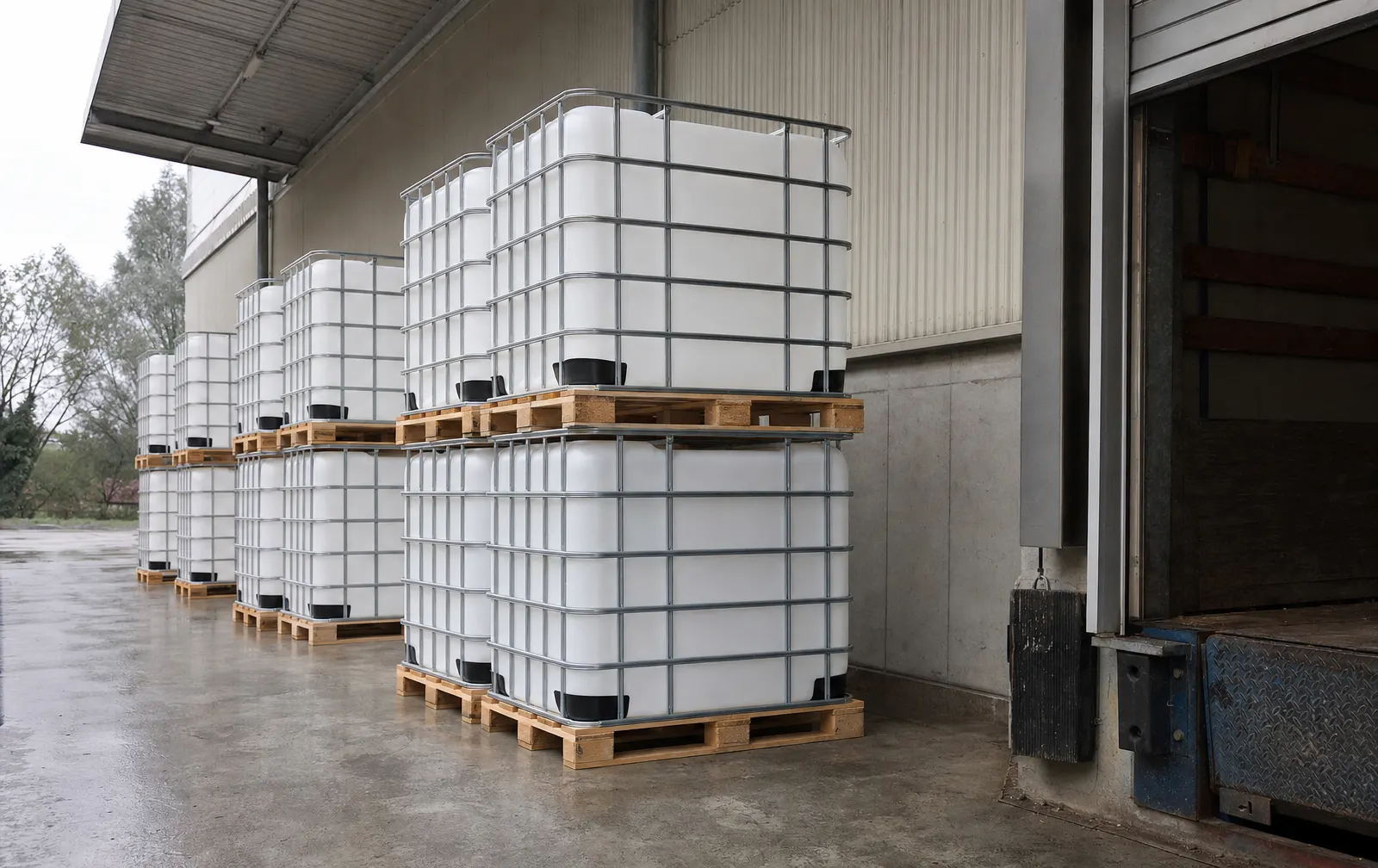
Delivery to Minnesota
The Twin Cities warehouses in Hennepin (3,616 jobs), Anoka (1,119) and Washington (779) counties sit where I-94 and I-35 meet. Southern Minnesota's packing and canning towns are reached on I-90 and I-35; western farm country on I-94 and US highways.
What Minnesota buyers usually ask for
Dairy and food plants usually split their orders between food-contact totes for ingredients and rated totes for clean-in-place caustic and acid. Totes kept outdoors through a Minnesota winter need protection: water-based products can freeze and split a bottle. Ask for the valve to be drained or capped for storage. Twin Cities warehouses expect appointments; rural plants need the dock details.
Name a receiving contact; northern plants may be a two-day run. Duluth is farther still.
- Food-grade new IBC totesFor turkey, pork, vegetable and cheese plants’ liquid ingredients.Bottle resin: 21 CFR 177.1520 · Prior contents: None · Gaskets: EPDM or Viton · Sizes: 275, 330 gal
- UN-rated chemical totesFor clean-in-place caustic and acid and other sanitation chemicals.UN code: 31HA1/Y · Packing groups: II and III · Specific gravity: 1.6 or 1.9 · Retest: every 2.5 years
- New totes for water storageFor stock water; drain the valve before a freeze.Sizes: 275 and 330 gal · Bottle: new, food-contact on request · Full weight: about 2,400 lb (275) · Footprint: 48 x 40 in
Not sure which tote? Start from the product. A regulated liquid needs a UN-rated tote marked for its specific gravity.
Anything people eat or drink needs a food-contact bottle; a Class I flammable needs a steel IBC.
Quote totes delivered in Minnesota
Give the delivery ZIP in Minnesota, the product you will fill, how many totes and how often, and whether the site has a dock or needs a liftgate. If your plant books receiving slots, name the window and any site rules for drivers.